Finding a place to stop should never be the final decision of the day. For an over-the-road driver, parking is part of the route plan, just like fuel, weather, delivery windows, and hours of service. When the search begins only after the clock is tight, every full lot creates pressure to keep moving or accept a poor location.
That pressure is common because the shortage is real. The Federal Highway Administration describes truck parking shortages as a national safety concern and warns that drivers who cannot find an official space may continue while tired or stop on shoulders, ramps, and vacant lots. A better plan cannot create more spaces, but it can reduce wasted miles and rushed decisions.
Treat Parking as a Fixed Part of the Trip
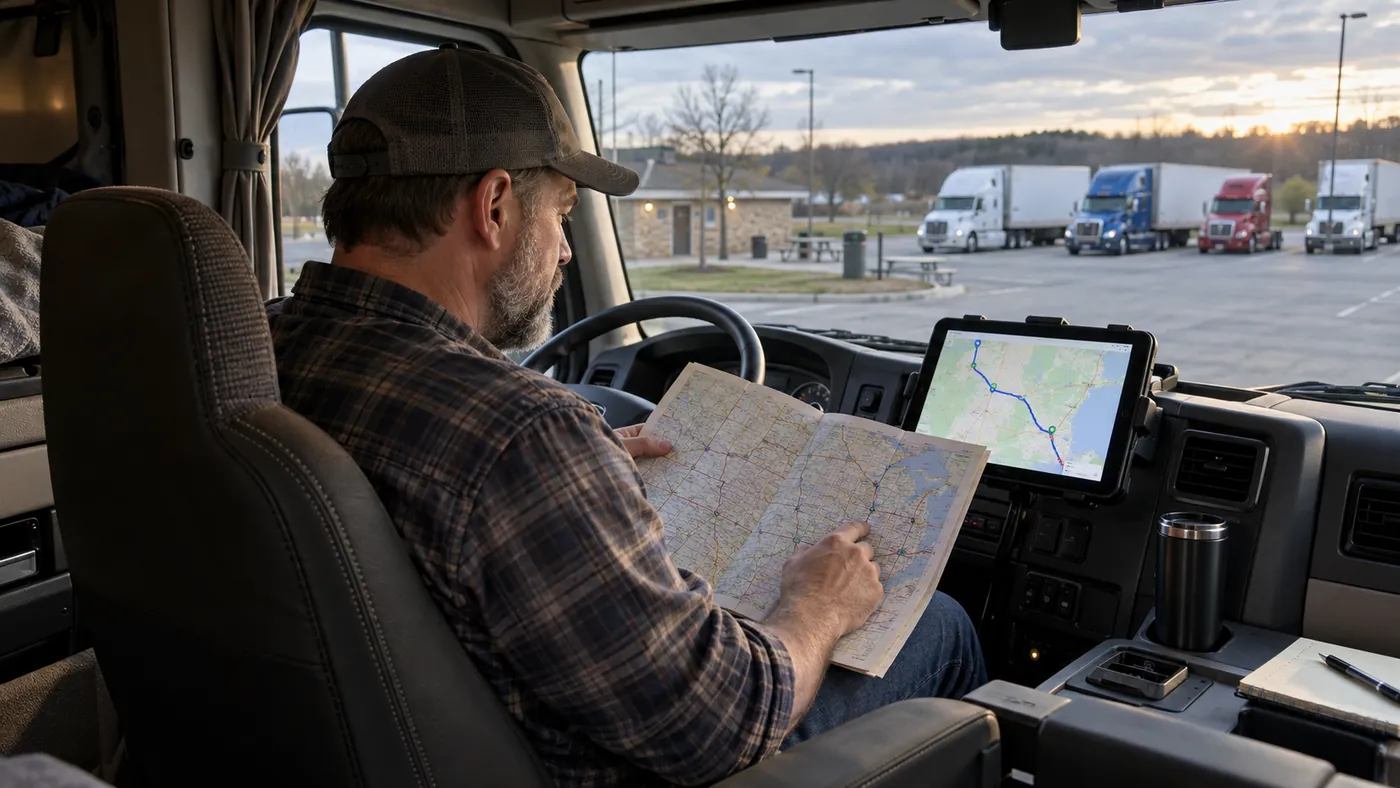
Begin with the time and general area where you expect to stop. Then work backward. Consider the shipper or receiver, likely traffic, fuel needs, weather, terrain, and the amount of time you can realistically drive. The goal is to identify a parking zone before you leave, rather than bet the entire day on one truck stop.
Build three options into the plan:
- Primary stop: the facility that best fits your route and expected stopping time.
- Backup stop: a legal location before or beyond the primary, with enough fuel and driving time to reach it.
- Early exit: a place where you can stop sooner if traffic, weather, detention, or fatigue changes the day.
Save each location before departure. Record the correct entrance, not just the street address. A truck entrance may be on a different road from the passenger-car entrance, and a missed turn near a busy facility can cost more time than the parking search itself.
Start the Search While You Still Have Choices
Do not use the final minutes of available driving time as your search window. The correct buffer changes with the corridor, day of the week, season, weather, and local demand. A major freight lane near a city may fill earlier than a rural stop. A storm or highway closure can change availability across an entire region.
Set a decision point during pre-trip planning. At that point, review the primary and backup stops while safely parked. If the primary looks doubtful, choose the backup before passing the last good alternative. This turns parking into a controlled route choice instead of a chain of desperate lot checks.
The same approach helps with hours-of-service compliance. The FMCSA Interstate Truck Driver's Guide to Hours of Service explains the federal framework for property-carrying drivers. Company policy, your ELD status, and the facts of the trip still matter, so ask your safety department when a situation is unclear.
Use Live Information, but Verify It
Parking apps, state 511 services, dispatch notes, and driver reports can narrow the search. Some states use Truck Parking Information Management Systems that collect availability data from sensors or entry and exit counts. FHWA notes that these systems are designed to give drivers real-time information and make better use of existing spaces.
No feed is perfect. A space can disappear between the last update and your arrival, a reserved area may be separate from the free lot, and construction can change access. Use digital availability as one signal, then confirm the facility rules, entrance, and current conditions. Never manipulate a phone or tablet while the truck is moving.
Evaluate a Facility Before You Commit
A legal space is the first requirement, but it is not the only one. As you approach, slow down and scan the entire area. Look for marked truck spaces, posted restrictions, adequate lighting, pavement condition, pedestrian activity, and a route that allows you to enter and leave without a blind or extremely tight maneuver.
A practical parking check includes:
- Legality: the space is intended for commercial vehicles and does not block a fire lane, ramp, gate, scale, or travel lane.
- Visibility: lighting and sight lines let you observe the tractor, trailer, and nearby activity.
- Traffic exposure: the truck is protected from fast-moving vehicles and is not at the end of a poorly marked row.
- Surface and weather: the ground is stable, reasonably level, and not likely to flood, soften, or become an ice trap overnight.
- Exit path: you can leave without depending on another vehicle moving first.
- Personal security: the walk to the building is lit and does not force you through active truck lanes.
If the lot feels chaotic, unauthorized, or unsafe, keep the truck moving only if you can legally and safely reach a planned alternative. A bad space does not improve because the day has been difficult.
Park for the Night, Not Just for the Moment
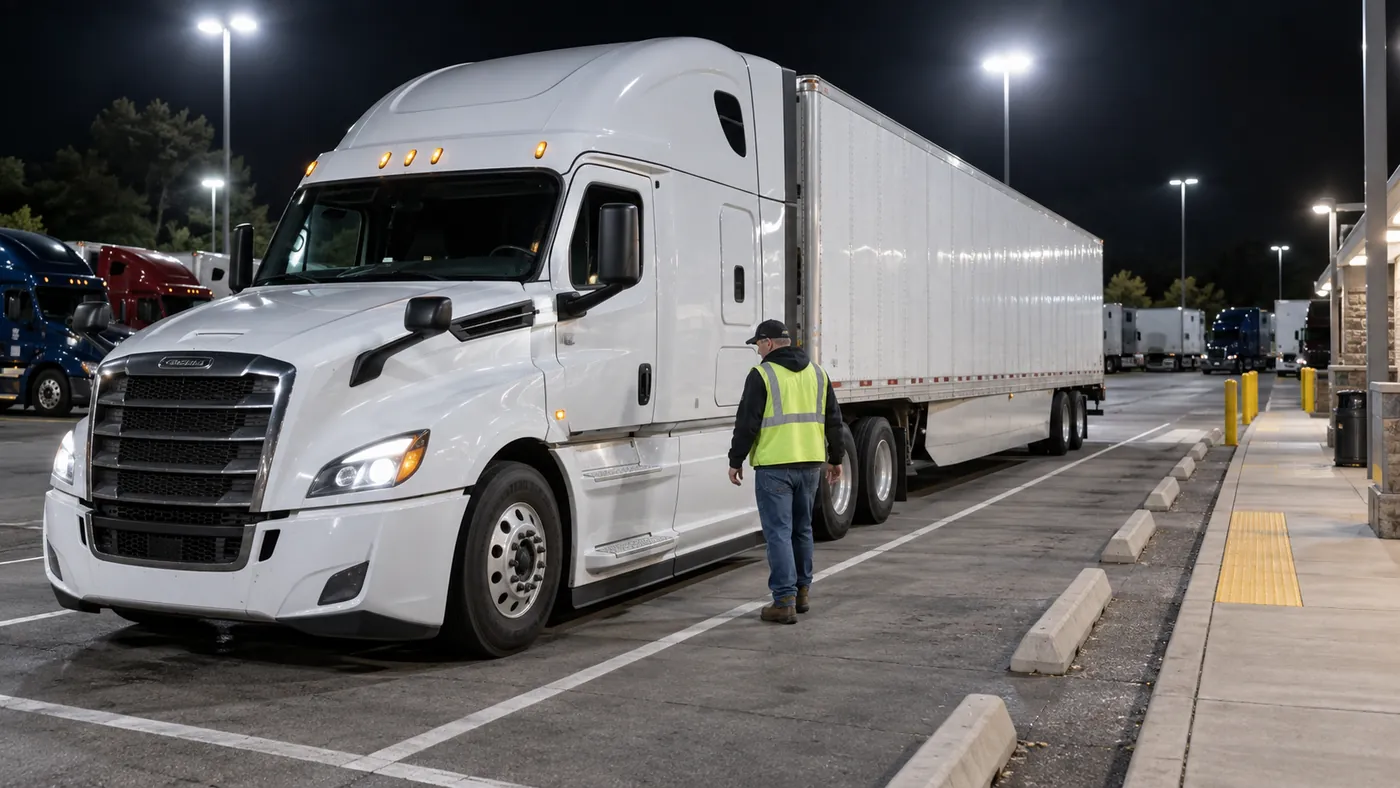
Think about what the lot will look like several hours later. Do not nose into a corner that may be blocked by late arrivals. Avoid parking beside damaged equipment, leaking vehicles, open trailer doors, or unstable loads. Leave enough clearance for neighboring trucks to turn and open doors without contacting your equipment.
Once parked, set the brakes, secure the tractor and trailer, remove valuables from view, and make a brief walkaround. Check tires, lights, doors, seals, fifth-wheel area, and anything that could change overnight. Follow company procedures for cargo security and report suspicious activity to facility staff or law enforcement rather than confronting anyone.
Know When Reserved Parking Makes Sense
Paid or reserved parking is a business decision. It may be worthwhile when the route ends near a major city, the arrival time is late, weather is deteriorating, or a guaranteed legal stop protects an appointment the next morning. Compare the fee with the cost of extra fuel, unpaid search time, a late delivery, or the risk of ending up somewhere unsafe.
Before paying, confirm the reservation window, cancellation rule, assigned-space procedure, and whether the facility guarantees a space or only accepts a request. Keep the confirmation available offline in case reception is poor at the entrance.
Avoid the Most Dangerous Shortcuts
Highway shoulders and entrance or exit ramps expose a stationary trailer to traffic that may drift out of its lane. They can also restrict visibility for merging drivers and emergency vehicles. FHWA specifically identifies shoulder and ramp parking as a safety hazard when official parking is unavailable.
Vacant lots and closed businesses create different problems: uncertain permission, weak lighting, soft pavement, towing risk, and no reliable exit. Never assume that the presence of other trucks makes a location legal. When parking availability collapses, contact dispatch early and document the choices you considered under company procedures.
A Simple Parking Plan for Every Run
- Choose a realistic stopping region before departure.
- Save a primary stop, backup stop, and early exit.
- Check entrances, restrictions, weather, and likely demand.
- Review availability at a safe decision point while parked.
- Commit to the backup before time and fuel remove your options.
- Inspect legality, lighting, surface, traffic exposure, and exit clearance.
- Secure the equipment and perform a short walkaround before rest.
- Recheck the truck and surroundings before departure.
Good Parking Decisions Protect the Next Day
Safe parking is more than finding an empty rectangle of pavement. It protects rest, equipment, cargo, driving time, and the next appointment. The most reliable drivers make the decision early, keep a legal backup, and refuse to let a full lot turn into an unsafe shortcut.
No app or checklist can guarantee a space. A repeatable process can make the search shorter and the final choice better. Plan the stop with the same care you give the route, and parking becomes one less surprise at the end of a long shift.