Introduction to Block Heaters
If your routes include sub-zero mornings, icy yards, or long layovers in wind-scoured lots, the right engine block heater turns risky cranks into predictable departures. Below, we unpack how truck-focused preheating works, what types exist, and how to size, install, and maintain a system that consistently delivers a reliable cold weather vehicle start without wasting power or stressing components. Think of this as your practical, field-tested vehicle heating solutions playbook: we translate lab specs into real-world decisions, fold in truck maintenance tips, and close with proven product options for fleets and owner-operators.
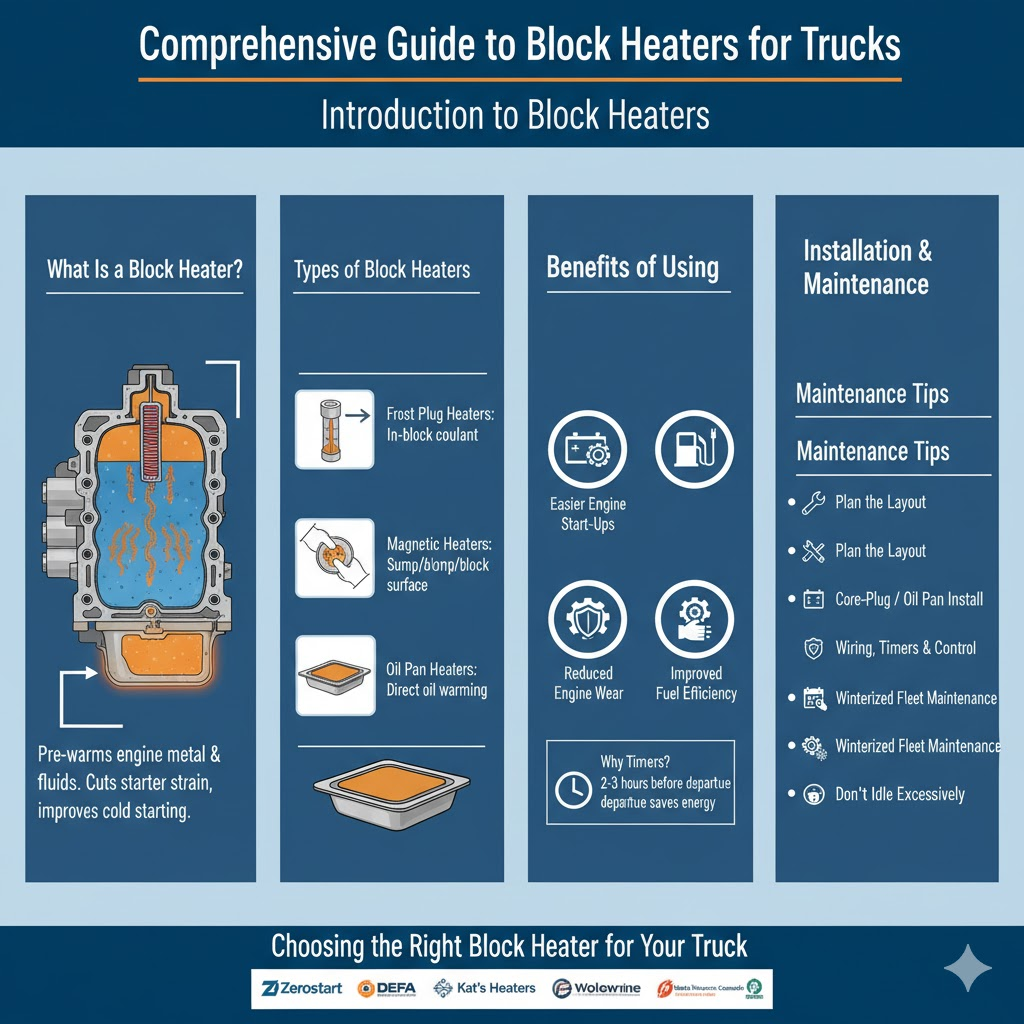
What Is a Block Heater?
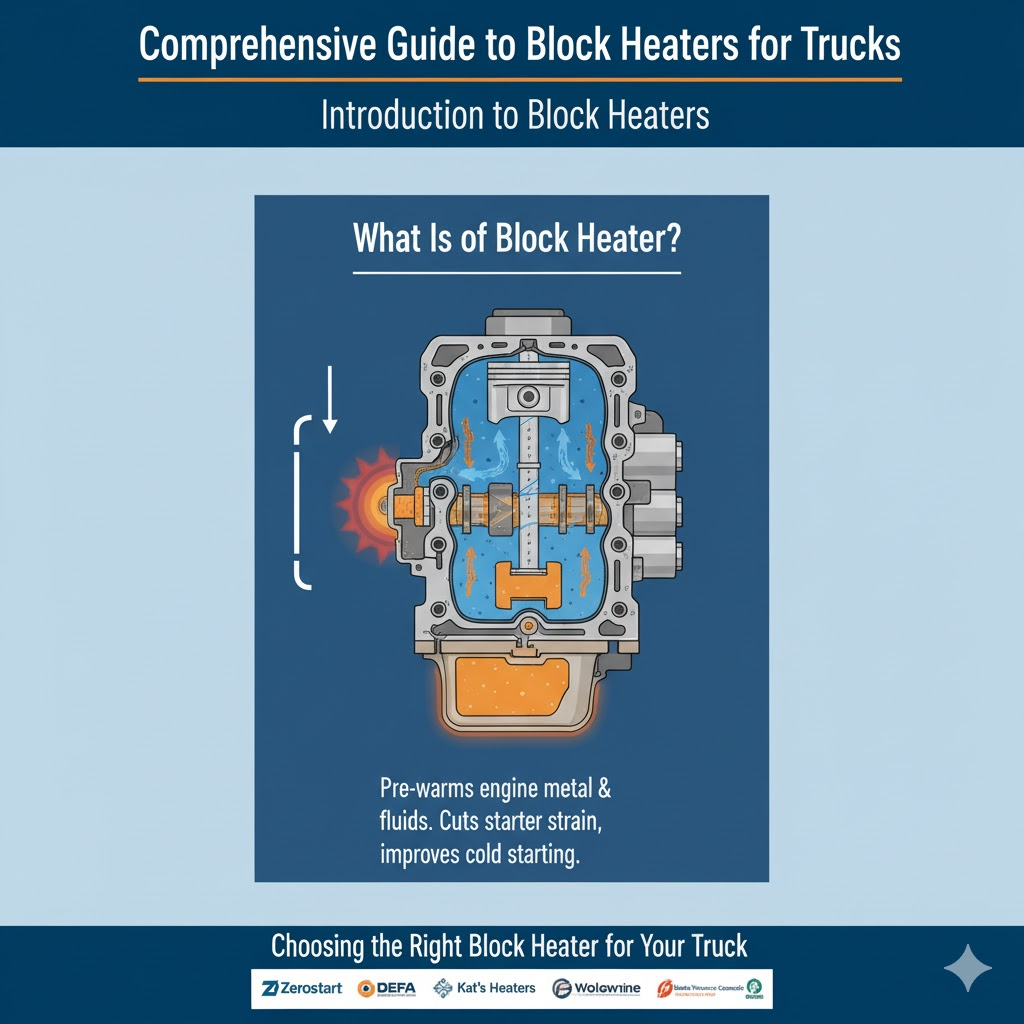
A truck engine heater (often called a block or engine coolant heater) pre-warms the engine’s metal and/or fluids—coolant, oil, or both—so the crankshaft, bearings, injectors, and battery aren’t battling molasses-thick lubricants at dawn. This vehicle engine preheating raises engine block temperature and engine crank temperature, cuts starter motor strain, and accelerates engine temperature rise to normal operating range. On diesels, preheat for diesel matters even more: warm coolant and oil help atomization, improve combustion, and ease diesel cold starting.
Importance of Block Heaters in Cold Climates
Cold starts spike fuel use and emissions until the engine warms up. Multiple government and utility sources recommend using timers so heaters run for prestart engine warming only when needed—typically two to three hours before departure—reducing energy while improving starts and cabin defrost times. That advice comes from Natural Resources Canada and municipal air-quality programs that have tested preheating’s impact on cold-start emissions.
Types of Block Heaters
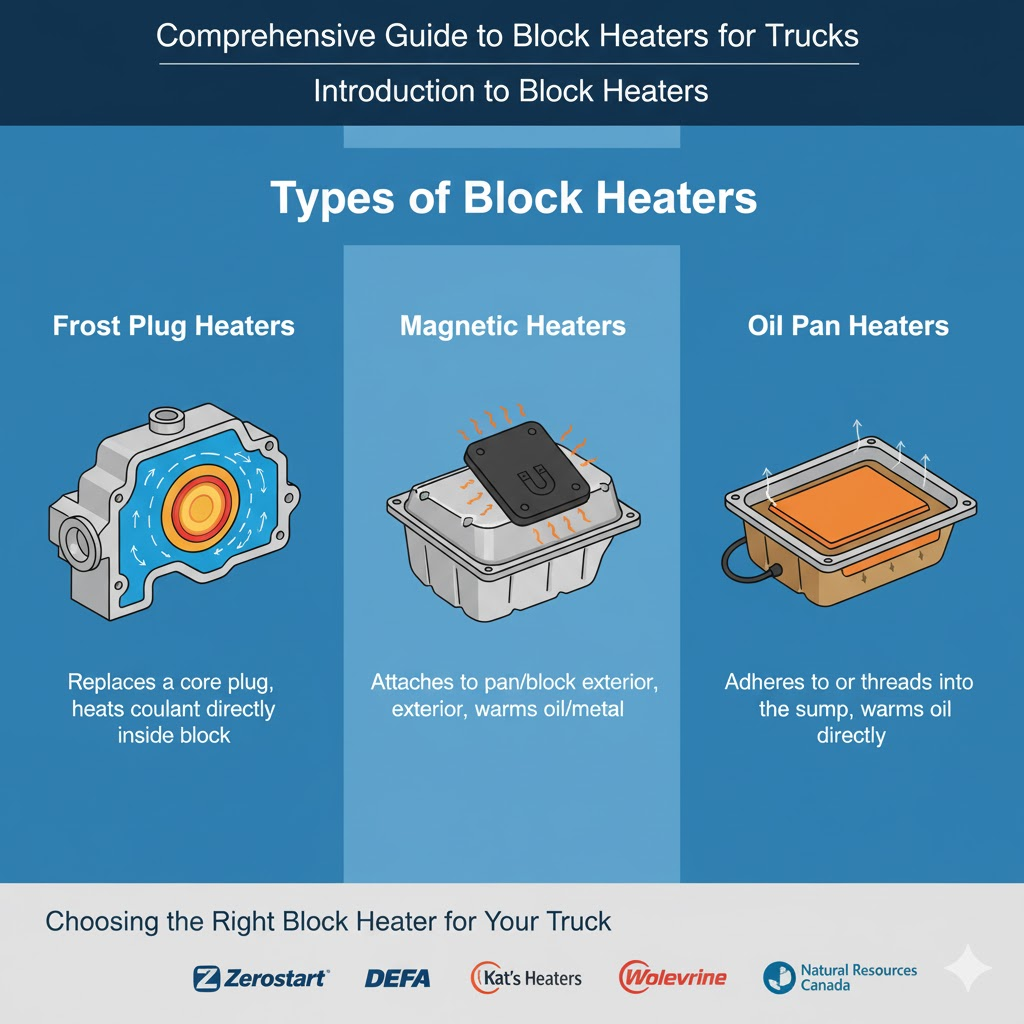
Frost Plug Heaters
Also called frost plug heater or freeze-plug heaters, these replace a core plug and sit directly in the water jacket. They heat coolant inside the block—true prestart coolant warming—and are typically the most efficient way to deliver thermal energy for starts because heat flows straight into the engine casting. Major OEM-grade brands (e.g., Zerostart, part of Phillips & Temro) offer engine-specific kits that match plug diameter and depth for proper fit, plus harnesses for heater cord safety and tidy corded heater access at the grille.
When to choose: Best primary heater for medium/heavy trucks where an application-specific kit exists. If a core-plug kit isn’t available for your engine, look at a frost plug alternative (coolant in-line or plate-style) from the same supplier.
Magnetic Heaters
A magnetic block heater attaches to the pan or block exterior using a powerful magnet. It’s the fastest way to add heat on engines without easy coolant access. Units like Kat’s magnetized warmers target sump oil; heat then convects into surrounding metal, adding gentle engine bay warming methods. They’re popular as temporary cold start solutions or secondary heaters. (Brand overview for Kat’s Heaters.)
When to choose: Light/medium rigs that need occasional help, or as a backup to a coolant heater when you can’t install a core-plug unit.
Oil Pan Heaters
An oil pan heater adheres to (or threads into) the sump to warm oil directly—great for engine preconditioning that speeds engine warm-up and reduces cold start stress. Wolverine-pattern stick-on pads and threaded immersion styles are sized by oil capacity and come with wattage tables—helpful for engine heater selection and safe block heater wattage choices. (Wolverine sizing and product info under Phillips & Temro resources.)
When to choose: As a complement to a coolant heater on cold climate engines, or as your primary heater when coolant access is limited.
Quick note on “diesel engine heater” combinations: For severe climates, pairing a coolant heater (core-plug or in-line) with an oil pan pad can deliver the best overall engine preheating benefits and measurable block heater efficiency gains—faster oil flow and quicker defrosts.
Benefits of Using a Block Heater
Easier Engine Start-Ups
Warmer metal and fluids mean the engine spins faster with less battery sag. That softer crank reduces starter motor strain and voltage drop to ECMs and glow-plug circuits—exactly the kind of truck engine performance edge that matters on dark winter runs. Municipal and utility testing show preheating cuts misfire, trims unburned fuel, and improves initial idle stability.
Reduced Engine Wear
Cold oil doesn’t protect as well. By shortening time-to-pressure, preheating lowers boundary friction and accelerates hydrodynamic lubrication, contributing to engine wear reduction and longer component life—key truck engine care during winter engine care cycles. Peer-reviewed research confirms cold-start operation is a high-wear, low-efficiency regime; preheat helps the engine reach steady-state faster.
Improved Fuel Efficiency
Several studies and technical summaries indicate fuel economy gains during warm-up and lower emissions when engines are preheated—particularly at deep sub-zero temperatures. Estimates range from ~10–20% reduction in consumption during the initial warm-up period (not the entire trip), reinforcing the case for smart timers and preheat schedule discipline.
Context matters: A 2023 field study on preheating noted mixed whole-trip energy outcomes depending on heater type and use case; still, cold-start emissions and early-cycle fuel use improved with preheat. In fleets, that early-cycle benefit is often the win that justifies the practice.
Installation and Maintenance
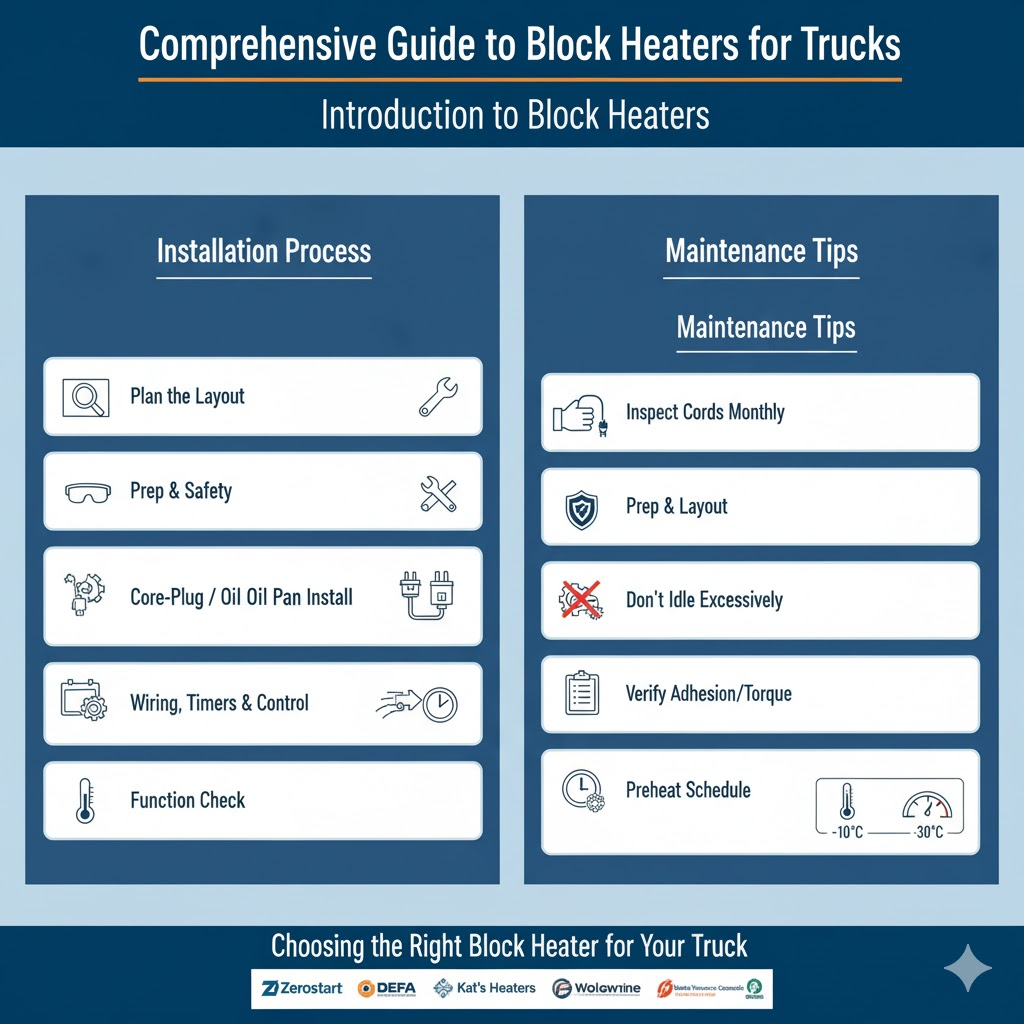
Installation Process
This is the block heater installation overview we hand to techs and owner-operators. Always follow kit-specific instructions.
- Plan the layout
Verify heating system compatibility (engine code, plug size, coolant routing). Map vehicle preheat options: core-plug, in-line coolant, pad, or magnet. Choose a protected path for the cord with clean corded heater access at the grille. - Prep & safety
Park on level ground, disconnect battery (as required), let the engine cool, and drain coolant if installing a core-plug unit. Wear eye protection and use spill pans. - Core-plug (frost plug heater) install
Remove the core plug, clean bore, test-fit, and seat the heater per torque spec. Route the harness away from moving parts and heat sources; avoid chafe points. Application-matched kits from suppliers like Zerostart list exact plug sizes and clocking. - Oil pan heater install
Degrease and scuff the mounting spot, then affix the pad heater per instructions; use a roller for full adhesion. Route leads along existing looms and secure every 6–8 inches. Sizing charts from the manufacturer help match pad wattage to oil capacity. - Magnetic heater use
Mount on a clean, flat ferrous surface. Treat magnets as temporary aids; secure cords to prevent the unit from coming loose on the move. (Brand overview: Kat’s.) - Wiring, timers, and control
Use outdoor-rated cords, a GFCI outlet, and weatherproof connections. For remote heater control, smart plugs or yard-mounted thermostatic controllers can automate on-cycles. Many public and utility guides recommend timers set 2–3 hours before departure; this is usually enough thermal preconditioning even in deep winter. - Function check
After refilling coolant, burp air, inspect for leaks, and confirm heater current draw. With oil pan pads, verify a gentle engine temperature rise at the sump with an IR thermometer.
Legal & safety: Use grounded cords, avoid daisy-chains, and protect plugs from splash. Route cables to minimize trip hazards in yards and ensure heater cord safety with strain reliefs and covers in high-traffic areas.
Maintenance Tips
- Block heater maintenance: Inspect cords monthly; replace nicked insulation immediately. Confirm the plug face is clean and dry.
- Winterized fleet maintenance: Add heater checks to PM sheets alongside batteries, glow plugs, and coolant tests.
- Engine warm up tips: Don’t idle excessively—drive gently after start; idling wastes fuel and counters block heater efficiency gains.
- Durability checks: Verify adhesion of pad heaters at seasonal changeover and re-torque clamps or brackets on coolant heaters.
- Preheat schedule: In moderate cold (-10 °C), 1–2 hours often suffice; at -20 °C to -30 °C, plan 2–4 hours, validated by public guidance and utilities promoting timers.
Choosing the Right Block Heater for Your Truck
Factors to Consider
Use this decision tree to make sure your engine heater selection fits real-world duty:
- Climate & route
For cold weather driving at or below −20 °C, prioritize coolant-side heating (frost plug heater) for fastest cabin defrost and reliable cold climate engines starts. Add an oil pan pad if you want even faster oil pressure and less cold start stress. - Engine & packaging
If core-plug access is blocked by accessories, consider in-line or plate-style coolant heaters (a frost plug alternative) or a high-quality pad heater sized by block heater wattage tables. Application-matched kits (Zerostart/DEFA) simplify heating system compatibility. - Electrical & control
Yard power availability dictates vehicle preheat options: timer at the pole, remote heater control via smart plug, or thermostatic wall controllers that delay energizing a warm engine—common in northern facilities. - Operations & access
Consider winter vehicle preparation logistics: Is there safe corded heater access for drivers at 03:00? Is routing clear of snow chains and brush guards? - Costs & ROI
Total up engine block heater costs (hardware + power). Utilities show electricity savings with timers vs. overnight runs, which reduces operating expense while preserving the early-cycle benefits. - Safety & compliance
Follow heater cord safety best practices and GFCI use per yard policy. Add preheat checks to truck winter maintenance SOPs and winterized fleet maintenance dashboards.
Engine heater types recap:
• Coolant (core-plug/in-line) = quickest cabin heat and prestart coolant warming.
• Oil pan pads = instant lube flow at crank, especially valuable on diesels.
• Magnetic = portable truck engine accessories for mild climates or backup.
Recommended Products
We include one official reference per brand—verify engine codes and fitment before purchase.
- Zerostart (Phillips & Temro) — Application-specific freeze-plug and immersion engine heater types for light, medium, and heavy trucks; strong documentation and parts support.
- DEFA — Engine-specific coolant heaters and integrated charger/warmer systems (vehicle heating solutions) with model lookup. Particularly popular in Nordic fleets.
- Kat’s Heaters (Nickson Industries) — Broad line including magnetic block heater and in-line options suited to passenger, light/medium trucks, and industrial; good value for temporary or supplemental heat.
- Wolverine (Phillips & Temro) — Adhesive oil pan heater pads sized by fluid volume; robust tables for matching pad wattage to sump capacity.
Why timers?
Utilities and agencies consistently recommend timers to avoid wasted energy—two to three hours is typically enough before departure, even in harsh conditions. That practice captures the practical engine preheating benefits without unnecessary run time.
Block Heater FAQs (for quick dispatch training)
- What are the top “block heater reviews” takeaways?
Verified fit matters more than raw wattage. Proper aim (coolant flow direction) and clean surfaces for pads trump headline specs. - What’s the best engine bay warming methods mix?
Core-plug coolant + pad on the sump for severe climates; magnet heaters as backup. - Can this improve fuel efficiency?
Yes—primarily during the first minutes after start. Studies cite early-cycle fuel economy gains and emissions reductions when preheated. - How about “roadside idle vs preheat”?
Avoid long idles. Use timers and controlled prestart engine warming for better outcomes.
Conclusion
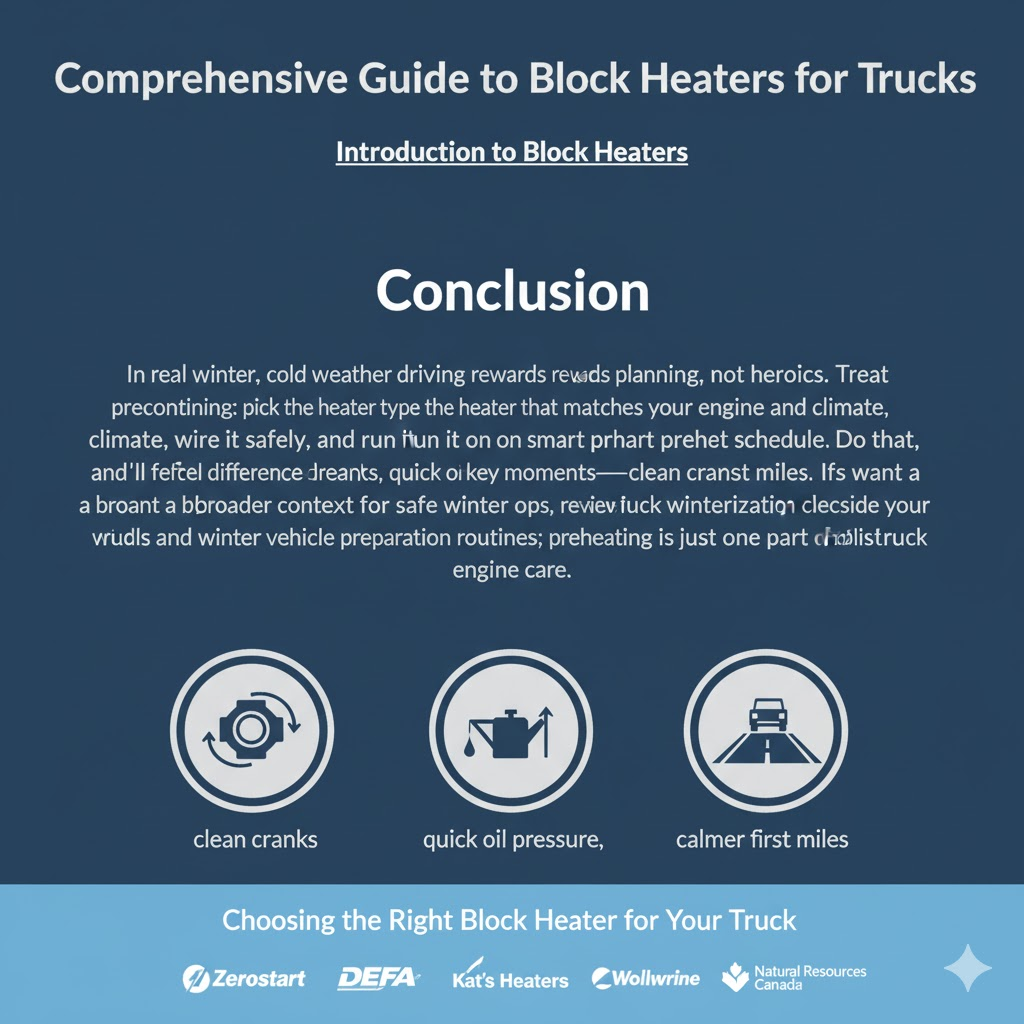
In real winter, cold weather driving rewards planning, not heroics. Treat preheating as thermal preconditioning: pick the heater type that matches your engine and climate, wire it safely, and run it on a smart preheat schedule. Do that, and you’ll feel the difference at the key moments—clean cranks, quick oil pressure, and calmer first miles. If you want a broader context for safe winter ops, review winter driving tips alongside your truck winterization checklist and winter vehicle preparation routines; preheating is just one part of holistic truck engine care.
Field Notes & Practical Add-Ons (Human-tested details)
- Block heater wattage & runtime: Bigger isn’t always better. Match wattage to displacement and fluid volume using manufacturer charts; then set a timer for 2–3 hours to balance heat gain with losses to ambient—real savings show up on your yard’s power bill.
- Pad adhesion in deep cold: Warm the pan area with a heat gun before sticking; roll firmly. If the pan has ribs, choose a pad that bridges flat zones for full contact.
- Remote heater control: Smart outdoor plugs or yard thermostats reduce babysitting and standardize preheat across shifts.
- Engine warm-up vs drive-off: After start, drive gently; don’t idle to “full hot.” That’s among the simplest engine warm up tips to protect after-treatment and save fuel.
- Compatibility checks: Confirm hose routing, accessory clearance, and harness strain relief—the small stuff that prevents call-backs.
- Safety walkaround: Add plug caps at the grille, check for ice bridges on cords, and teach drivers to report nicks—heater cord safety avoids GFCI trips.
Glossary (so your techs and drivers speak the same language)
- engine heater types: coolant (core-plug/in-line), oil pan heater, magnetic block heater.
- engine preconditioning / thermal preconditioning: preheating metal and fluids before start to reduce cold start stress.
- engine block heater benefits: easier starts, faster cabin heat, engine wear reduction, early-cycle fuel efficiency improvements.
- engine heater selection: matching heater style and block heater wattage to engine and climate.
- engine block heater costs: hardware + electricity; trimmed via timers and remote heater control.
- prestart engine warming/prestart coolant warming: timed warmup before key-on.
- truck engine accessories: cords, covers, and switch panel add-ons for yard outlets.
- winter engine care / truck winter maintenance: combined checks for coolant strength, batteries, heaters, belts.
- engine bay warming methods: pad, magnet, coolant heater; use combinations in severe cold.
- engine preheating benefits / block heater efficiency gains: faster engine warm-up, lower starter motor strain, improved truck engine performance.
- vehicle preheat options: yard power, timers, thermostatic controls.
- cold climate engines / cold weather vehicle start: engines operating in sustained sub-zero environments.