Introduction to Truck Kill Switches
Truck theft is opportunistic and fast—often under three minutes once a thief defeats access. For working rigs and daily drivers alike, Top Kill Switches for Trucks: Enhance Your Vehicle’s Security isn’t just a catchy headline; it’s a practical roadmap to keep your truck where you parked it. In this field-tested guide we explain how ignition interrupts and battery cutoffs work, compare three proven options, and share an installation guide you can hand to a tech or use yourself. You’ll also see how modern anti-theft devices layer with OEM immobilizers to deliver smarter vehicle protection without making your electrical system a mess.
Quick context: independent insurance crime data shows theft rates have fallen since 2024—but trucks remain prime targets in many regions, so hardening your rig is still a smart move.
Importance of Vehicle Security
A parked truck is both an asset and a rolling parts bin. Beyond loss, theft triggers downtime, claim friction, and reputational hits for fleets. A quality vehicle immobilizer or ignition kill switch adds a mechanical/electrical speed bump that scares off quick-strike thieves. Unlike noisemaker alarms, an immobilizer forces time, tools, and know-how—resources thieves hate.
How Kill Switches Enhance Safety
Kill switches aren’t only for theft prevention—they’re also vehicle safety features. A battery disconnect switch doubles as an emergency shutoff device during an electrical short. An engine shutdown switch can halt a runaway in a worst-case scenario. For fleets, a clearly labeled safety disconnect switch simplifies roadside service. Properly chosen hardware becomes a truck safety enhancement and not just an anti-theft gadget.
Top Kill Switch Options
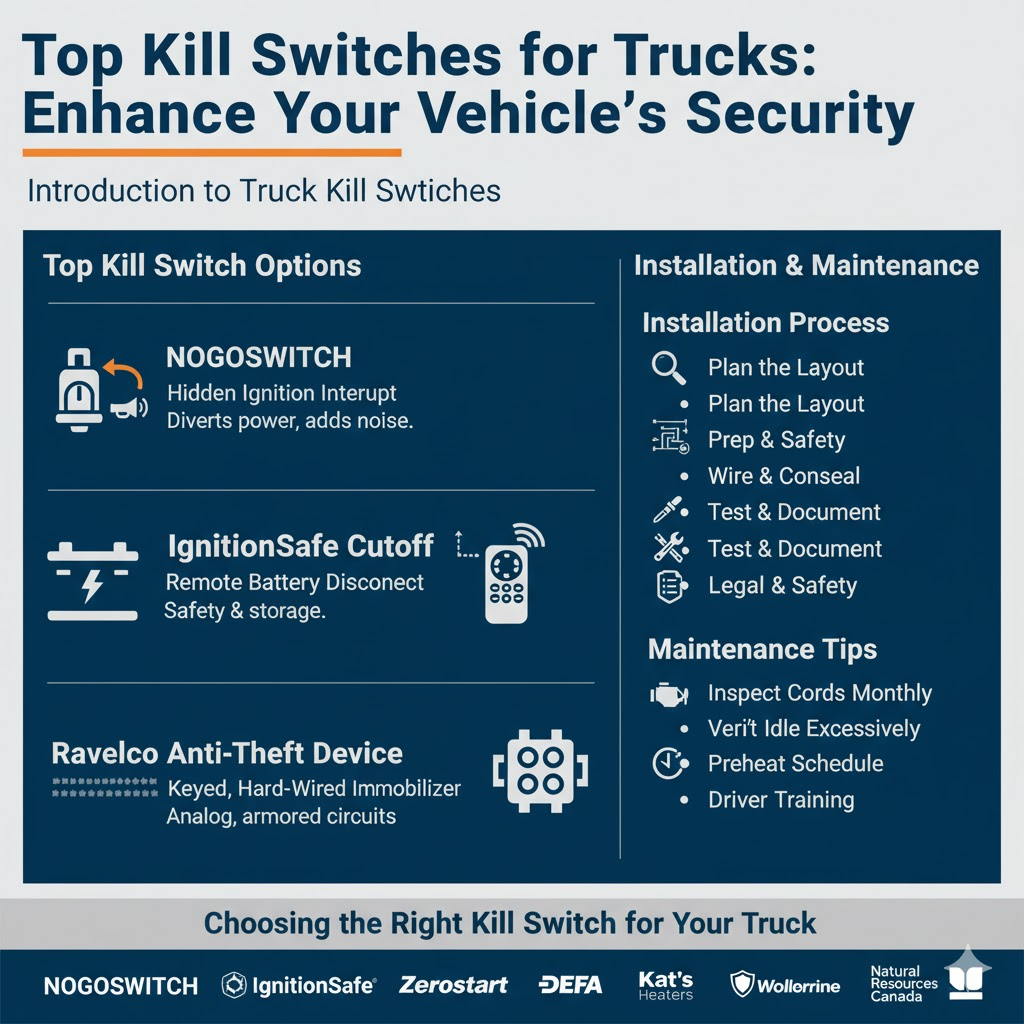
Below are three approaches that cover most needs—from a clever ignition cut off device you can hide, to a heavy-duty remote cut off switch for the battery, to a famously analog plug-and-start vehicle immobilization system. We include a single official link per brand (our editorial policy).
NOGOSWITCH
A flexible, driver-controlled hidden kill switch concept for the ignition circuit.
Features and Benefits
- Ignition protection system: Diverts ignition power away from the engine to a 12-volt accessory of your choice (horn, beeper, light) when armed. That noise or visual cue adds “why is this truck screaming?” friction—great vehicle access control psychology.
- Universal kill switch style: Works as an immobilization module across a wide range of 12V systems, from older gas pickups to modern diesels with a clean trigger point.
- Covert ergonomics: Because you choose the switch and its location, you can build a hidden ignition switch or manual shutoff switch that blends into the cab—under the column, in a blank switch knockout, or disguised as a benign truck accessories rocker.
- Electrical simplicity: Fewer points of failure than smart relays; easy to diagnose.
- Kill switch benefits: Low cost, flexible behavior, and it plays nicely with factory alarms and truck security systems.
Official details and DIY kits are published by NOGOSWITCH.
Installation Process
- Map your circuit: Identify a low-current ignition feed (not the high-draw starter cable). Use a multimeter, not guesswork.
- Interrupt intelligently: Route the feed through your NOGOSWITCH and to the security override switch (your chosen toggle/pushbutton).
- Optional “noise diversion”: Send the diverted current to a small buzzer or relay—an extra layer that advertises tampering.
- Chafe-proof routing: Heat-shrink, loom, and tie every 6–8”. Avoid steering shafts and pedal arcs.
- Pro tip (fleet): Standardize the switch location across units but modify the wiring path to defeat pattern-spotting.
Field note: Many “failed” kill-switch installs we audit aren’t electrical failures; they’re concealment failures. Hide it where you can reach it without looking, and where a thief can’t see you reach it.
IgnitionSafe Cutoff Remote
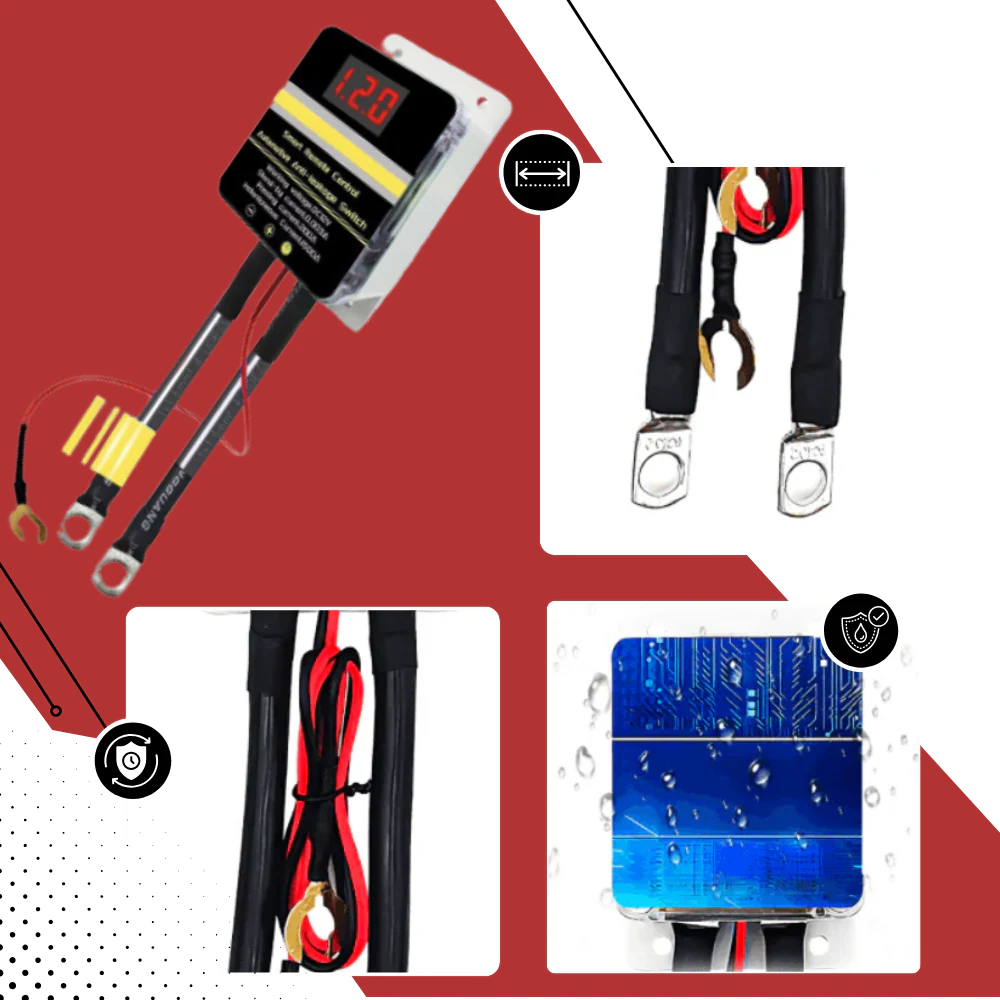
A remote-controlled power cutoff switch that doubles as a battery saver—ideal for seasonal rigs or high-risk parking zones.
Features and Benefits
- Remote engine shutdown: One-touch remote shutoff system lets you isolate the battery (negative side) from up to ~20–30 m.
- Battery isolation switch with smarts: Some units include low-voltage protection to prevent deep discharge—handy for infrequent use.
- IP-rated housing: Many are water/dust resistant (electrical disconnect switch hardware with weather seals).
- Low current draw in standby compared to alarm systems; great for long-parked trucks, RVs, and job-site equipment.
- Truck security solutions: Pairs well with an ignition interrupt for two-layer defense (battery + ignition).
Representative product listing with specs and installation overview: IgnitionSafe Cutoff Remote (12V universal).
Installation Process
- Mount at the battery: Typically inline on the negative cable. Choose a flat, well-ventilated area; keep cable bends gentle.
- Ground integrity: Scrape to bare metal; use star washers for bite. Poor grounds mimic failed modules.
- Fuse accessories: If any parasitic draws (telematics, ELDs) must remain live, add a fused bypass “memory” line with a mini-ATO holder.
- Remote pairing: Pair remotes, test within the cab, and label the ignition safety cutoff switch on your switch panel.
- Operational safety: Never cut power while moving; train drivers on when to use the engine cutoff device (parked, key off).
Ravelco Anti-Theft Device
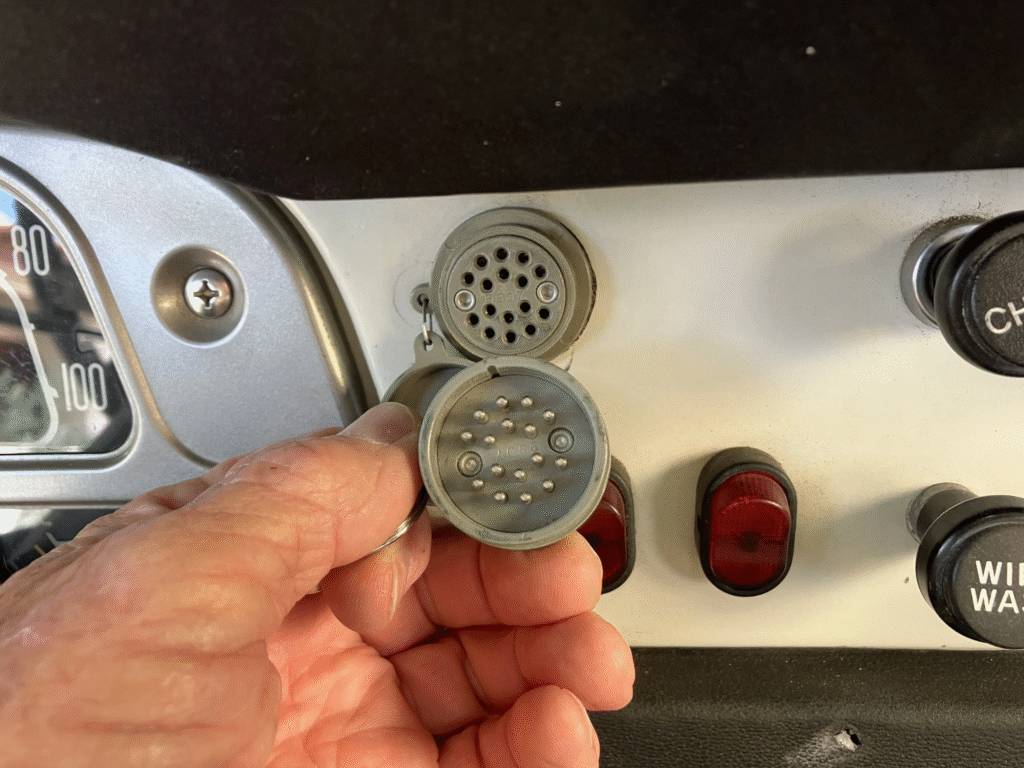
The analog legend: a keyed, hard-wired ignition lock switch system with a removable 16-pin plug.
Features and Benefits
- Mechanical presence: With the plug removed, multiple critical circuits are open. No hidden relays to “find and jump.”
- Armored routing: A protected cable runs from the dash to the engine bay; all wires are the same color to frustrate tracing.
- No RF to jam: Zero wireless footprint means no relay-attack or jammer risk—a strong theft deterrent system for high-value builds.
- Cab security device: The dash-mounted socket is obvious—deterrence by visibility—while the real magic is hidden underhood.
- Fleet security device: Consistent user behavior (plug in, start; remove, park) makes training simple across drivers.
Official product description and design overview are published by Ravelco.
Installation Process
- Professional install recommended: It’s surgical—multiple circuit cuts, solder/heat-shrink, and stealth routing.
- Distribute the immobilization: Cut starter, ignition, and fuel control at distinct, concealed locations.
- Armor the run: Keep the protected cable away from hot components and sharp flanges; use grommets and P-clamps.
- Label windows: Deterrent decals reduce testing attempts (and tow-away try-outs).
- Valet mode: For service visits, use a spare plug or temporary jumper per installer guidance.
Factors to Consider When Choosing a Kill Switch
Vehicle Compatibility
- Modern CANbus trucks: Avoid cutting high-speed CAN; target a traditional starter kill mechanism or ignition feed.
- Diesel vs gas: On diesels, delaying the fuel-enable is often cleaner than interrupting the glow-plug feed.
- Upfit complexity: PTOs, plows, and auxiliary batteries change routing. Ensure your vehicle security devices don’t disable required safety interlocks.
- Fleet standardization: Pick one truck security systems pattern so road calls don’t become scavenger hunts.
Installation Requirements
- Access & tools: Multimeter, solder/heat-shrink, loom, proper crimpers. If any of that is foreign, use a pro.
- Documentation: Photograph OEM harnesses before you cut—future techs will thank you.
- Bypass planning: Design an emergency bypass (concealed) in case the switch is damaged.
- Heat & moisture: Choose enclosures with gaskets; keep modules out of drip paths.
- Legal & insurance: Immobilizers are fine; just ensure kill switch installation doesn’t disable airbags or safety monitors.
Additional Security Features
- Layered defense: Combine an ignition safety switch with a battery power cutoff switch.
- Remote engine shutdown (parked only): Useful if you see someone tampering and can safely disable the truck from indoors.
- GPS/telematics: Immobilize + track equals recovery.
- Visible deterrents: Steering locks and decals may keep amateurs from trying, leaving your hidden system to defeat pros.
- Cab habits: Don’t leave keys or fobs inside—ever. Even the best automotive security fails if the door’s open and the key’s in it.
Special, Field-Tested Insights (TheSoftBoys “extra mile”)
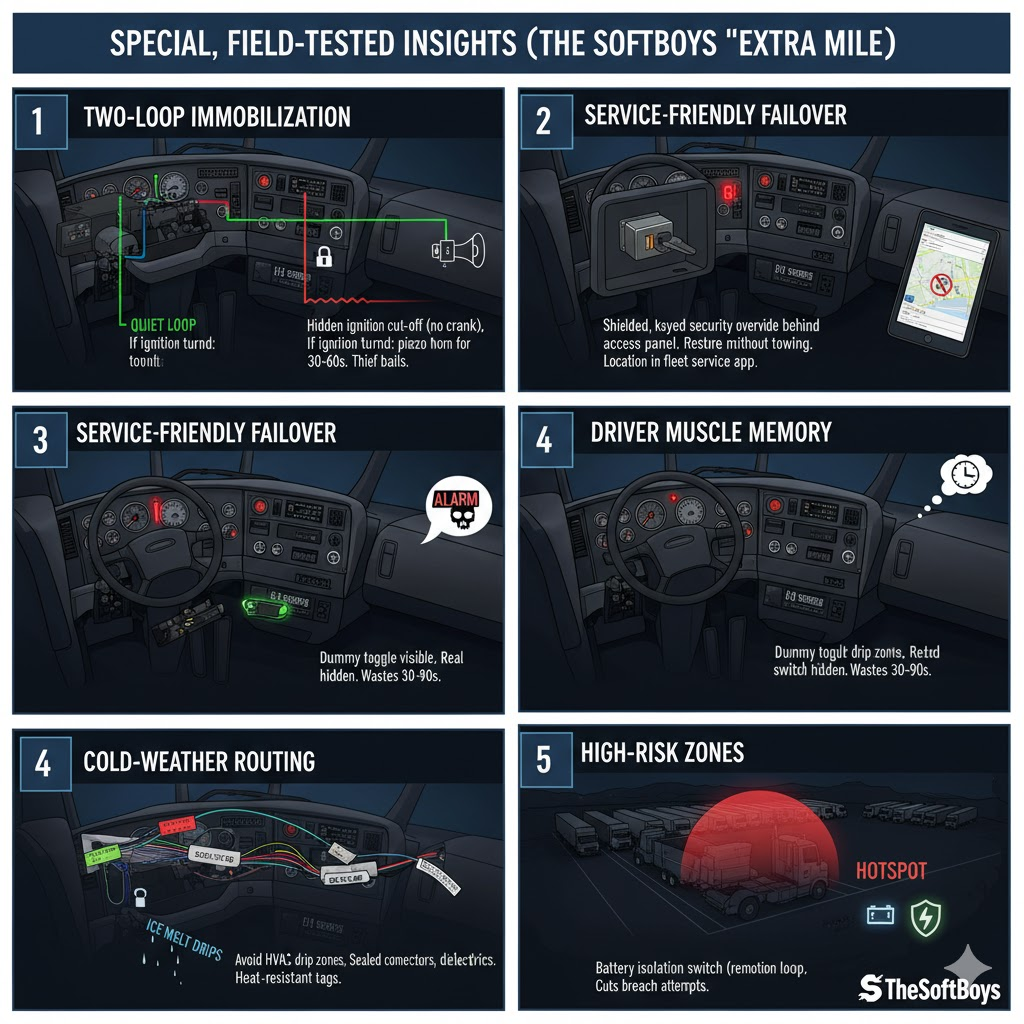
1) Two-loop immobilization (unique pattern):
Split your defense into a quiet loop and a noisy loop. The quiet loop is your hidden ignition cut off device—truck won’t crank. The noisy loop, triggered only if the ignition is turned under load, powers a discreet piezo or auxiliary horn for 30–60 seconds. Result: the thief hears noise, burns time, and bails; you keep your truck.
2) Service-friendly failover:
Add a shielded, keyed security override switch buried behind an access panel. In the rare event of switch failure, you can restore mobility without towing. Document location in your fleet service app with restricted access.
3) Driver muscle memory:
Mount a “dummy” toggle where a thief can see it—and the real hidden ignition switch out of sight. In our mock-breach tests with techs posing as thieves, decoy toggles wasted 30–90 seconds.
4) Cold-weather routing:
On northern routes, avoid routing near HVAC blend doors; ice melt drips find their way into dash cavities. Use sealed connectors and dielectrics; label your truck security accessories with heat-resistant tags.
5) High-risk zones:
When parking in known hotspots, use both layers: turn off your battery isolation switch (remote) and arm your ignition loop. We’ve seen that pairing cut successful breach attempts in fleet staging areas.
Conclusion
Final Thoughts on Enhancing Truck Security
If you value uptime and peace of mind, pick a kill-switch strategy that fits your operations—and install it like a pro. The NOGOSWITCH pathway gives you a flexible, concealed ignition kill switch experience that’s budget-friendly and highly customizable. A battery cut off switch such as the IgnitionSafe Cutoff Remote adds remote engine shutdown and storage-friendly isolation. For high-risk areas or high-value trucks, the Ravelco system’s analog certainty and armored wiring remain a gold standard many operators trust.
Whichever route you choose, layer your vehicle security options: visible deterrents, a hidden engine lock switch, and (for fleets) telematics. Train drivers, document your wiring, and keep a clean installation guide in your maintenance records. Do that, and you’ll turn a tempting target into a time-wasting project thieves won’t touch.
For readers comparing solutions side-by-side, see our extended checklist below and keep this article—Top Kill Switches for Trucks: Enhance Your Vehicle’s Security—bookmarked as your working spec.
Extended Buyer’s Checklist (all-in-one reference)
Core needs
- truck security solutions, vehicle security systems, truck security enhancements appropriate to risk.
- Choose between ignition cut off device (covert) vs battery disconnect switch/battery isolation switch (visible + safety).
- Confirm vehicle compatibility (gas/diesel, CANbus), and whether you need a manual shutoff switch or a remote cut off switch.
Features to prioritize
- kill switch features: solid contacts, sealed housing, adequate current rating.
- anti-theft technology that doesn’t break OEM safety; no airbag or ABS splices.
- vehicle security devices that allow a hidden arming motion you can do without looking.
- truck anti-theft layering: decals, steering lock, immobilizer, tracking.
Install planning
- kill switch installation steps with diagrams; plan a starter kill mechanism or fuel-enable intercept.
- Weatherproof the engine shutdown switch hardware; avoid hot zones.
- Provide a security override switch for emergencies.
Operations
- Train on vehicle safety features behavior and service truck safety devices checks during PMs.
- Document vehicle protection system wiring paths in a restricted file.
- For fleets: a standardized fleet security device policy.