Most people outside the industry still picture trucking as a lifestyle where you “live free” — no rent, no utility bills, and the open highway as your backyard. The reality in 2026 is more complicated. While company drivers avoid many of the big fixed costs that crush owner-operators, the daily expenses of life on the road have quietly risen, and the margin for error is thinner than it looks.
Here’s a clear-eyed look at what it actually costs to live and work over-the-road right now, backed by official industry and government data.
The Big Picture: Truck Operating Costs Keep Climbing
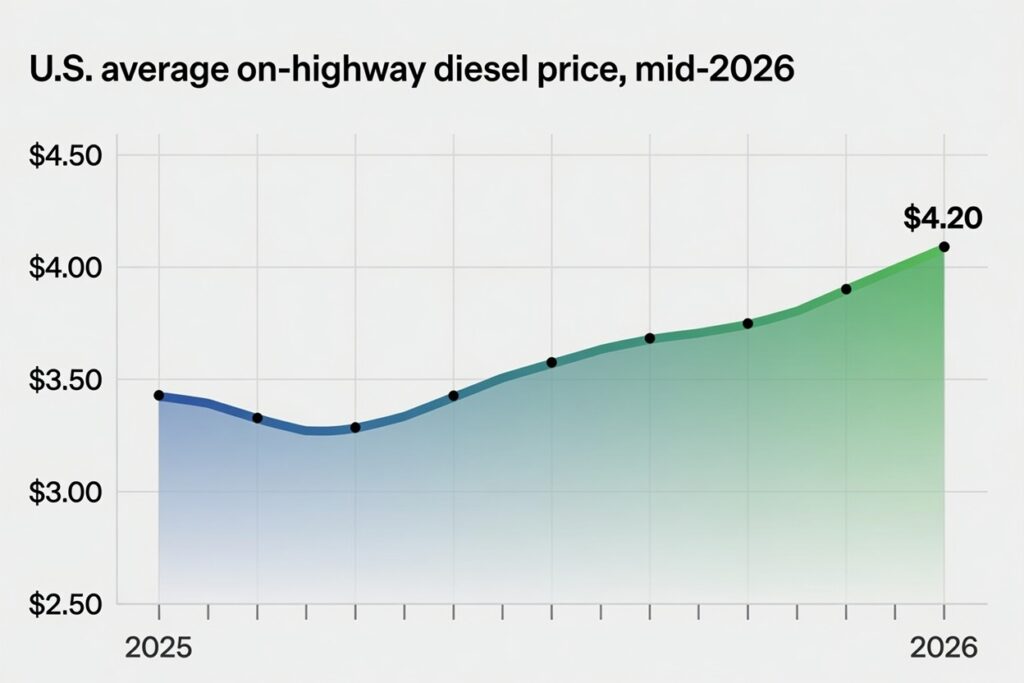
According to the American Transportation Research Institute’s (ATRI) 2026 Analysis of the Operational Costs of Trucking, the average cost to operate a Class 8 truck in 2025 hit a record $2.336 per mile. When fuel is removed from the equation, non-fuel costs still rose 4.2% to $1.854 per mile.
The biggest percentage jumps came from tolls (+13.2%), repair and maintenance (+8.6%), driver benefits (+6.6%), and tires (+6.4%). Only fuel and driver pay grew slower than overall inflation. Early 2026 data shows most of these trends continuing.
Source: ATRI 2026 Operational Costs Report and the full PDF available on truckingresearch.org.
Diesel Prices: The Variable That Hits Everyone
Diesel remains the single largest variable cost for anyone running their own authority or lease-purchase.
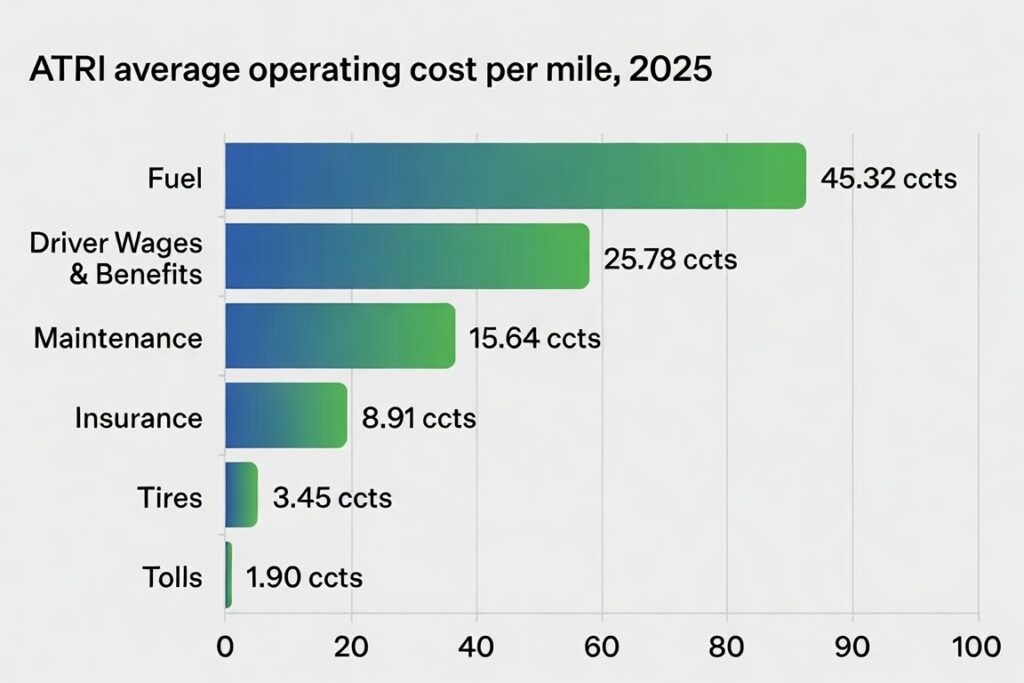
As of the week ending July 20, 2026, the U.S. Energy Information Administration (EIA) reported a national average on-highway diesel price of $5.134 per gallon. AAA data from late July showed the national average hovering around $5.30.
A typical loaded semi getting 6.5–7 mpg burns roughly 1,400–1,550 gallons in a 10,000-mile month. At current prices that is $7,200–$8,200 just in fuel before any discounts or surcharges.
Sources:
- EIA Weekly Retail Gasoline and Diesel Prices: eia.gov/petroleum/gasdiesel
- Detailed table: eia.gov/dnav/pet/pet_pri_gnd_a_epd2d_pte_dpgal_w.htm
- AAA Daily Fuel Gauge Report: gasprices.aaa.com
What Drivers Actually Spend Day-to-Day
These are the personal living costs that appear whether you are a company driver or an owner-operator.
Food This is the biggest controllable expense.
- Eating out almost every meal: $25–$40+ per day is common.
- Cooking or serious meal prep in the truck: $10–$16 per day is realistic for most drivers who put in the effort.
Drivers who switch from truck-stop restaurants to grocery runs and a 12-volt fridge/cooktop routinely cut $150–$250 from their weekly food budget.
Showers and laundry Most major chains charge $12–$18 for a private shower. Fueling 50+ gallons usually earns a free shower credit. Laundry typically costs $6–$12 per load.
Other recurring costs
- Cell phone + data: $90–$150/month
- Occasional paid secure parking or truck-stop overnight spots in high-demand areas: $10–$30
- Random truck-stop purchases and incidentals: easy to reach $40–$80 per week if you are not watching
For a disciplined company driver, total personal living costs on the road usually fall between $900 and $1,500 per month. Drivers who eat out constantly and ignore rewards programs push well past $1,800.


Owner-Operators Face a Completely Different Equation
Once you add truck payments, insurance, maintenance, tires, permits, factoring, and deadhead, the monthly cash requirement rises dramatically. Many one-truck operators see total monthly outflows of $8,000–$14,000+ before they pay themselves. Average net take-home for well-run operations often lands in the mid-to-high five figures after all expenses and taxes — not the six-figure lifestyle some online posts still promise.
The Tax Offset That Still Matters
For 2026 the IRS special transportation industry per diem rate for meals and incidental expenses remains $80 per day for travel within the continental United States ($86 outside CONUS). Drivers subject to Department of Transportation hours-of-service rules may deduct 80% of this amount.
An owner-operator on the road 260–280 nights a year can generate a meaningful Schedule C deduction without keeping every meal receipt — provided the ELD logs support the days claimed.
Source: IRS Notice 2025-54 (special per diem rates effective October 1, 2025 through September 30, 2026).
Hidden Costs That Rarely Appear on Spreadsheets
- Time spent searching for legal parking (ATRI has previously quantified significant lost drive time).
- Higher long-term medical and dental costs from limited access to routine care and poor diet.
- The mental load of constant decision-making under fatigue and isolation.
These do not show up as line items, but they affect retention, safety, and the real quality of life on the road.
Practical Ways Drivers Are Protecting Their Margins in 2026
- Treat food like a business expense and track it weekly.
- Use loyalty programs aggressively for free showers and fuel discounts.
- Slow down a few mph when diesel is above $5 — the fuel savings often outweigh the small loss in miles.
- Know your true cost per mile (including personal living costs) before accepting loads.
- Keep a dedicated emergency fund for the inevitable big repair or unexpected downtime.
Bottom Line
Living on the road in 2026 is still possible and, for many, still preferable to a desk job. But it is no longer a low-cost lifestyle by default. Company drivers who control food and small daily expenses can keep personal road costs reasonable. Owner-operators must treat every mile as a business decision or the numbers will quietly erode their income.
The freedom is real. So is the math. Drivers who respect both are the ones still thriving.