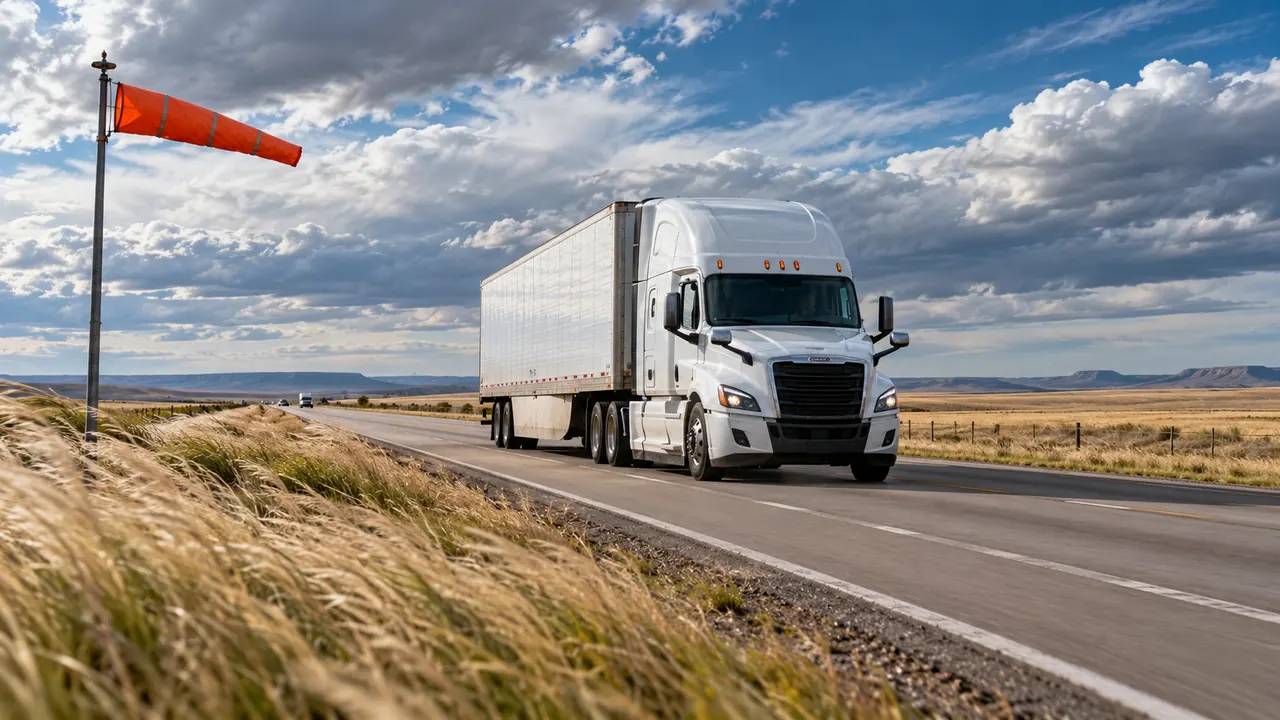
A clear road can still be a difficult road for a tractor-trailer. Strong wind may arrive without snow or heavy rain, and a high-sided trailer gives a gust a large surface to push against. The effect can be most surprising when a truck leaves a sheltered cut, passes a stand of trees, crosses a bridge, or turns onto a road exposed to the open plains. A driver may be making steady progress one minute and correcting a sudden lateral movement the next.
The safest response is not a single speed or wind number that applies to every rig. Trailer weight, load distribution, vehicle height, road alignment, gustiness, surface conditions, and local restrictions all matter. A reliable decision starts before departure and continues through the trip: review the forecast, identify exposed sections, watch how the vehicle actually behaves, and be willing to wait when the margin disappears.
Read the Forecast for the Whole Route
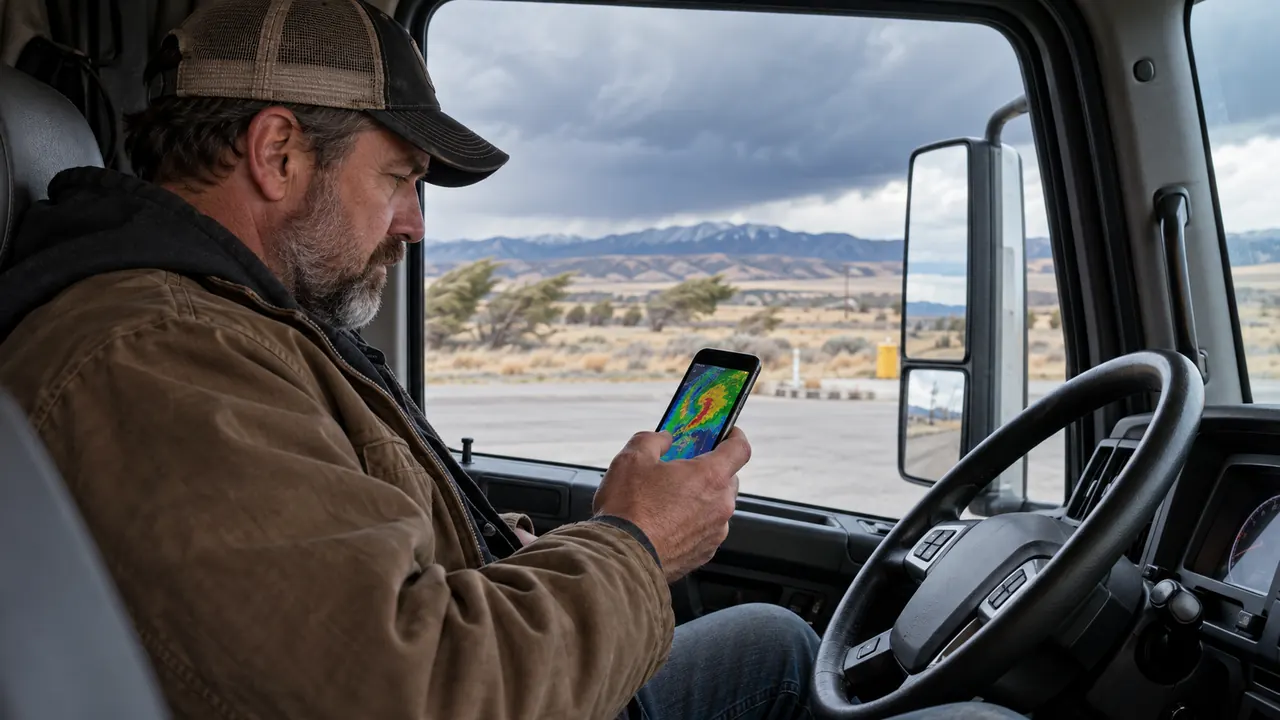
Check National Weather Service forecasts and alerts for the regions the trip will cross, not only the pickup and delivery cities. A driver who crosses several counties may encounter very different conditions in a single shift. Look at the timing of a wind advisory or high-wind warning, expected gusts, thunderstorm risk, blowing dust, and whether winds are forecast to change direction. The NWS wind-safety guidance warns that high-profile vehicles and trailers can be pushed or overturned by strong gusts.
Also check state 511 traffic information, highway message boards, and carrier alerts for bridge restrictions or road closures. A forecast is broad; a local restriction is specific to the route in front of you. Do not assume that a passenger-car navigation app understands high-profile or light-trailer restrictions. Save a truck-legal alternate route before entering a remote corridor, and discuss the change with dispatch while parked.
Note the difference between sustained wind and gusts. A steady crosswind may be difficult but predictable. Gusts can vary sharply, especially near terrain, buildings, and passing traffic. The NWS wind-threat guidance highlights the particular exposure of high-profile vehicles on routes perpendicular to the wind. Use the forecast as an early warning, then keep checking actual conditions and official road controls.
Know What Makes Your Combination Vulnerable
A tall, broad trailer catches more wind than a low-profile vehicle. An empty or lightly loaded trailer may have less weight resisting a lateral push, though a heavy load does not make unsafe wind harmless. Load height, securement, suspension condition, and tire condition also affect how the combination responds. The driver should know what is in the trailer and whether any equipment issue reduces the available safety margin.
Before departure, inspect tires, wheels, suspension, coupling, trailer doors, roof, and any exterior equipment that could be affected by a storm. Confirm that the freight is properly distributed and secured. A damaged door or loose tarp can become a problem before the wind becomes strong enough to move the entire vehicle. For flatbeds, check the cargo and covering according to the applicable securement plan.
Never turn a questionable truck into a weather experiment. A tugging steering wheel, persistent trailer sway, or need for large corrections is information. It is more useful than any generic social-media claim that a truck is safe below a certain wind speed. Tell dispatch what the rig is doing and find a safe place to reassess.
Reduce Speed Before the Exposed Section
If conditions remain safe enough to proceed, slow down before reaching an open bridge, elevated roadway, mountain gap, or broad plain. A lower speed gives the driver more time to react to a gust and reduces the energy involved if the vehicle drifts. Keep both hands on the wheel, look far ahead, and avoid abrupt steering inputs. Sudden overcorrection can make a trailer oscillate or move toward another lane.
Increase following distance and leave room beside other vehicles. A strong gust may move a neighboring vehicle as well as your own trailer. Do not travel alongside another tractor-trailer longer than necessary. Be especially attentive when passing a windbreak, a large building, or a cut in the terrain: the force acting on the truck can change quickly when it emerges into open air.
The FMCSA safety planner describes the duty to use extreme caution and reduce speed when hazardous weather affects visibility or traction, and to discontinue operation when conditions become sufficiently dangerous. Wind can also combine with rain, dust, snow, or ice to reduce control and visibility. The point is to adapt to the actual hazard rather than trying to protect a schedule.
Take Bridges and Open Corridors Seriously
Bridges, overpasses, and elevated roads may have little shelter from crosswinds. Some routes post warnings or close to light, high-profile vehicles before closing to all traffic. Obey those restrictions even if the previous miles felt manageable. Local agencies may know that a particular structure experiences stronger gusts than the surrounding road.
Do not stop on a bridge or narrow shoulder simply because the wind is uncomfortable. If a warning appears ahead, choose a legal, protected stopping place before the exposed section. If already on the road, continue only as far as needed to reach the nearest safe refuge, following official directions. A rest area, truck stop, or other authorized parking facility is generally better than a ramp or shoulder where passing traffic has little room to respond.
In dusty areas, wind can rapidly reduce visibility. The NWS notes that blowing dust can create separate driving hazards. If visibility is collapsing, treat it as more than a steering issue. Slow appropriately, increase space, follow official guidance, and seek a safe location rather than driving blind into a queue.
Make the Park-or-Proceed Decision Early
A driver should decide where the next safe stop is before passing it. Identify a primary parking location and a backup on the sheltered side of an exposed stretch. Consider available driving hours, fuel, weather timing, and whether the facility has room for a full tractor-trailer. Tell dispatch about the plan before the load becomes late, so the conversation is about managing risk rather than defending a last-minute stop.
Warning signs include repeated lane drift despite steady steering, trailer motion that does not settle, difficulty holding a safe lane position, debris crossing the road, or a new official high-profile vehicle restriction. An empty trailer or a route directly across the wind may warrant even more caution. There is no prize for proving that a truck can survive a gust. Park while the truck can still be controlled and the driver can still choose the stopping place.
The NWS high-wind safety advice specifically suggests considering a delay when strong gusts make travel difficult for high-profile vehicles. Waiting a few hours at a legal stop may be the fastest safe way to complete the trip. Record the weather alert, location, time, and instructions received according to carrier policy.
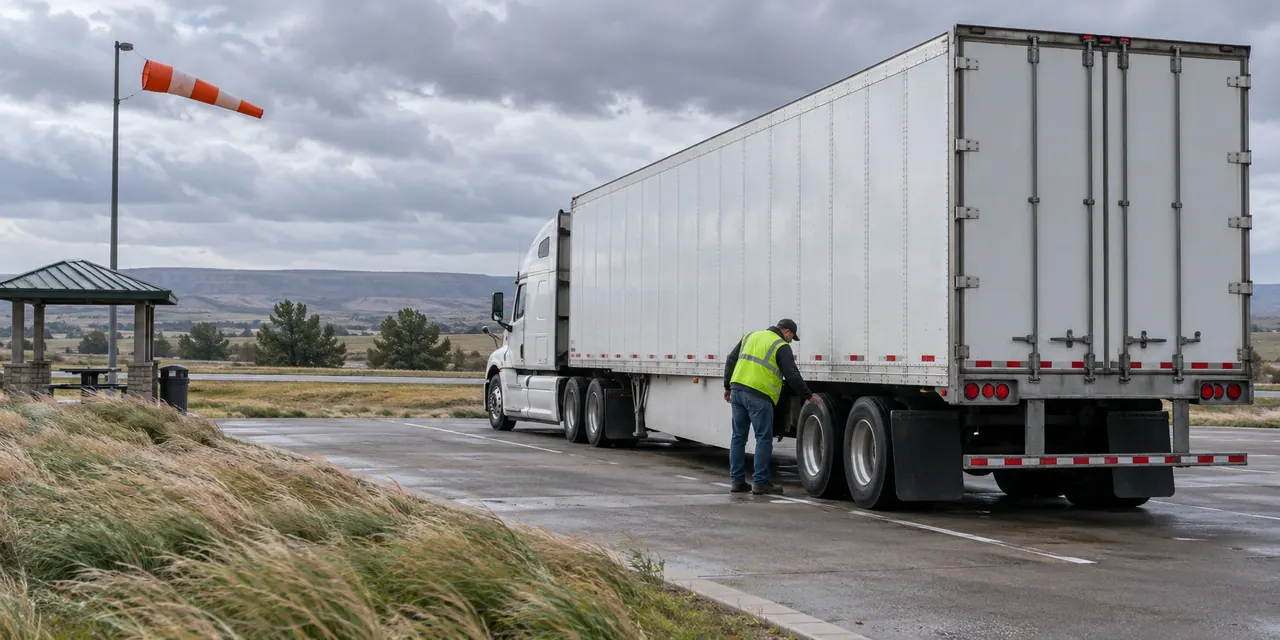
Choose a Safer Place to Wait
A parked truck can still be damaged by wind. Choose a legal space away from trees, power lines, loose signs, or construction material when possible. Be careful near the downwind side of buildings where debris can collect, and avoid a soft shoulder that could make departure difficult. Set the parking brakes, secure doors and windows, and follow company rules for the tractor and trailer.
Do not try to open a trailer door or handle a tarp in a strong gust unless the task is necessary and can be done safely. A large door can move suddenly. Stay inside a sturdy building if officials recommend shelter from a severe storm; follow local emergency instructions. When conditions improve, inspect the truck and trailer again before departure for tire damage, loose components, debris, or cargo concerns.
Communicate the Delay Clearly
Tell dispatch the route, current location, wind warning or restriction, how the combination is handling, and where you intend to stop. Share a realistic next update time. If a delivery appointment is at risk, the carrier can notify the customer while the driver focuses on operating safely. Do not let a phone conversation distract from a difficult stretch; pull over before reviewing maps or sending detailed messages.
If the road is closed, wait for an official reopening rather than searching for a narrow local road that may be worse for a truck. A detour must be legal for the vehicle's size and load. Good documentation and early communication protect the shipment, but they also make it easier for the next dispatcher or driver to understand why the trip changed.
High-Wind Checklist for Truck Drivers
- Check NWS alerts and state road restrictions along the whole route.
- Know whether the trailer is empty, lightly loaded, or otherwise wind-sensitive.
- Inspect tires, coupling, doors, exterior equipment, and cargo securement.
- Identify bridges, elevated roads, mountain gaps, and open stretches.
- Set a primary and backup safe stopping location before the exposed section.
- Reduce speed, use both hands, and leave extra room around other traffic.
- Stop when the truck cannot be held comfortably and safely in its lane.
- Communicate the delay and inspect the rig again before resuming.
Wind is an operating condition, not a test of a driver's toughness. The strongest decision may be to slow down, take a longer truck-safe route, or park until the gusts pass. A driver who plans for that choice early retains control of the trip instead of surrendering it to the next exposed mile.