Introduction to Air Horns for Trucks
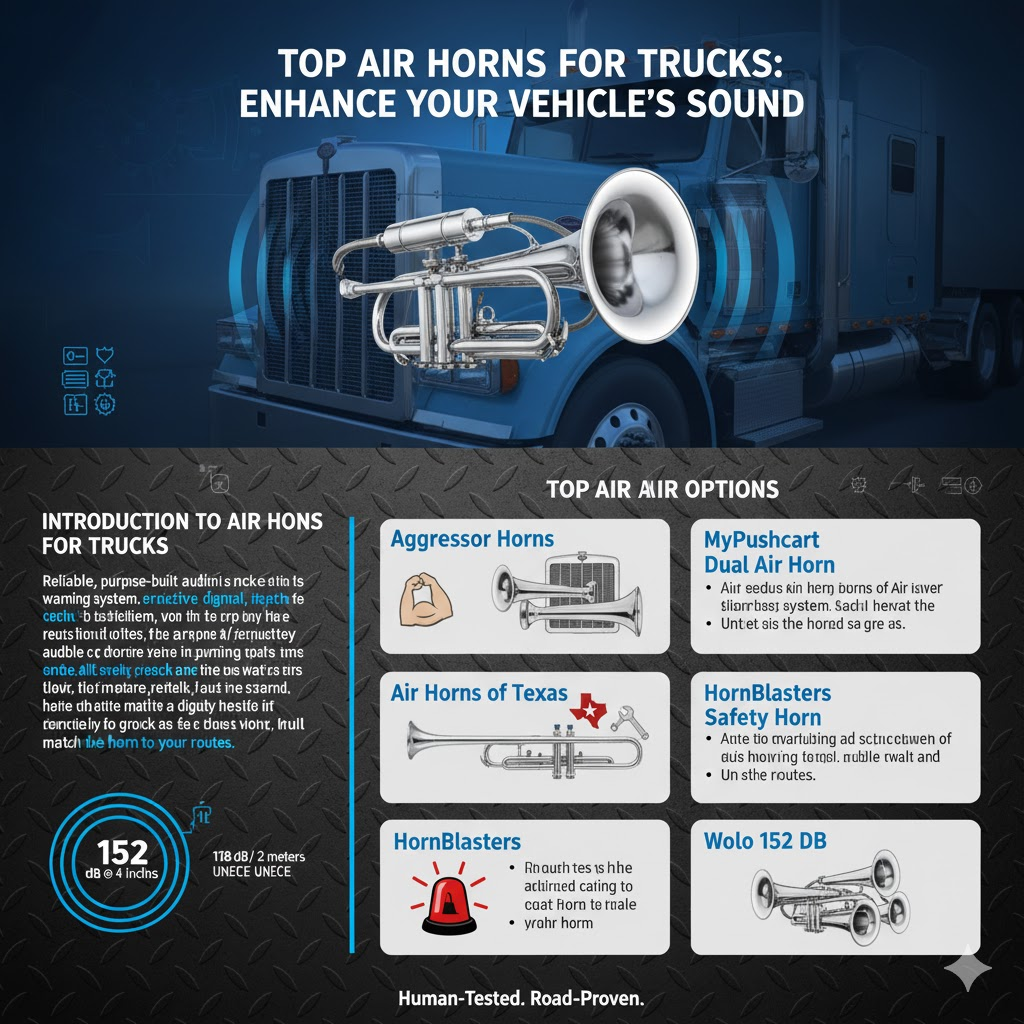
If you’ve ever had a car drift into your lane while the driver scrolls a feed, you already know the value of a decisive signal. Top Air Horns for Trucks: Enhance Your Vehicle’s Sound isn’t about being obnoxious; it’s about building a reliable, purpose-built audible warning system that cuts through cabin noise, crosswinds, and inattentiveness. Below you’ll find a practical truck horn buying guide with real-world install notes, a clear comparison of truck horn types, and a shortlist of kits we’d actually bolt onto our own rigs.
Human-tested insight: decibel numbers on boxes are measured at different distances; a “152 dB” claim at 4 inches is not the same as 118 dB at 2 meters (the UNECE test distance). We’ll help you read specs like a pro and match the horn to your routes, your truck safety equipment policies, and your local truck noise regulations.
Top Air Horn Options
This curated shortlist pairs real value with proven reliability. It’s not a sponsored list, and each company is referenced once.
Aggressor Horns
Buy here https://aggressorhorns.com/
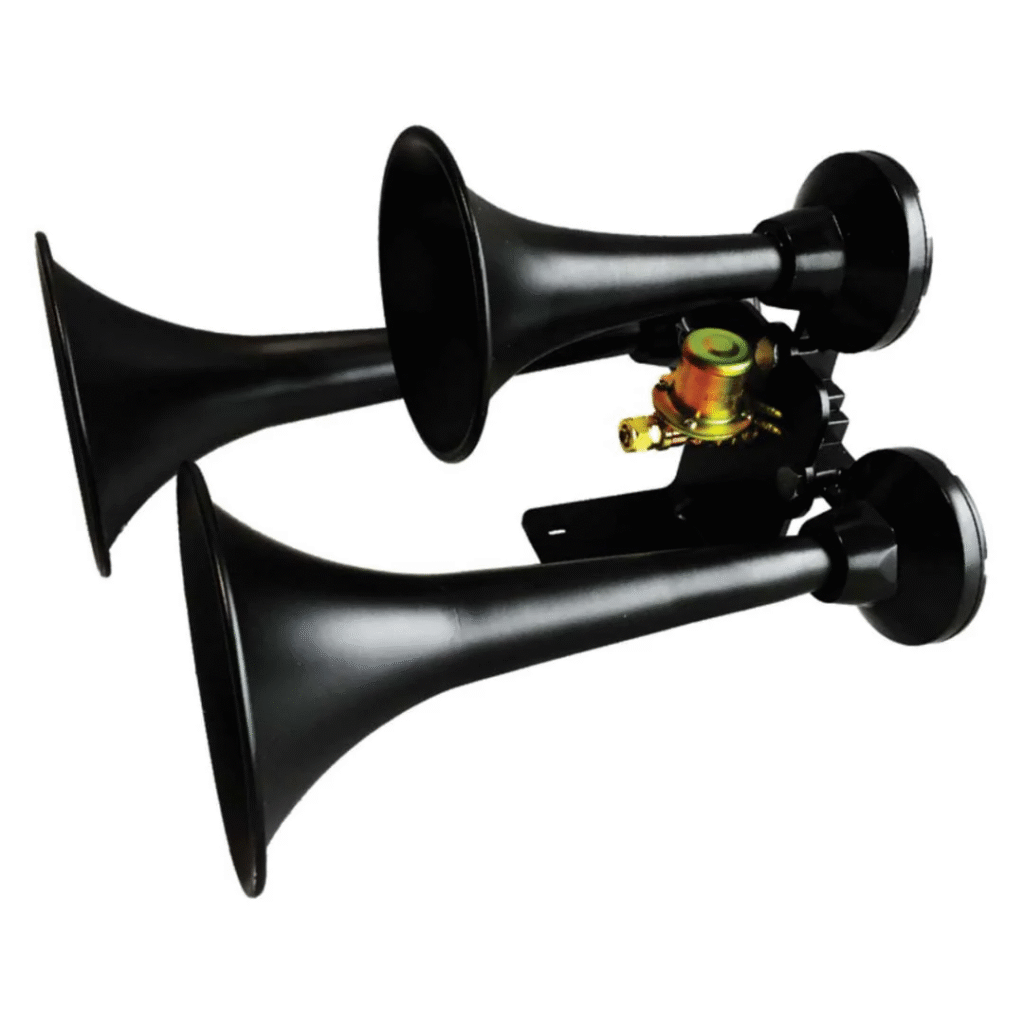
Best for: Drivers who want a fierce, “train-horn style” vehicle horn upgrade with robust compressors and tanks.
Why we like it (field notes): Aggressor’s lineup feels built for the realities of highway rigs—solid brackets, stout compressors, and easy-to-service plumbing. The trumpets deliver a loud truck horn voice that stays authoritative even when crosswinds and tire howl chew into your signal. Their bundles simplify the air horn power source and air horn relay kit choices, which reduces rookie mistakes during air horn installation.
Stand-out features:
- Steel trumpets that take abuse and resist resonance buzz.
- Straightforward air horn wiring harness options.
- Tanks and compressors sized so you get multiple blasts without long refill times.
Brand reference: Aggressor Horns’ product lineup and bundles.
MyPushcart Dual Air Horn
Buy here: https://shop.mypushcart.com/collections/air-horn-kits
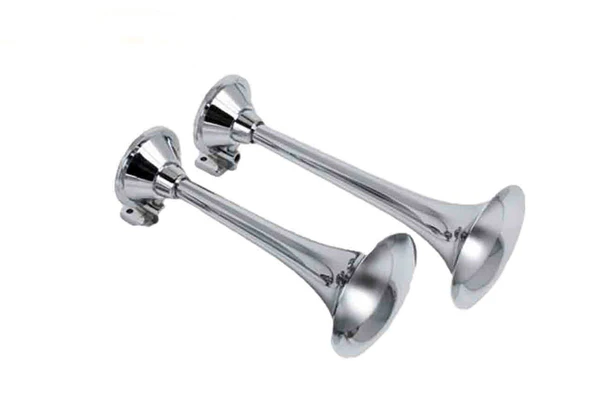
Best for: A compact dual horn setup that tucks behind the grille yet still delivers a convincing, low-pitched report.
Why we like it (field notes): These chrome duals are a tidy aftermarket air horn choice when bumper space is tight. The kit is simple, parts are labeled well, and the tones read “truck,” not “toy.” It’s a practical first step into the world of truck horn kits without taking on a full tank/compressor install.
Stand-out features:
- Claimed ~153 dB (manufacturer statement) with a deep timbre.
- Fits a wide range of vehicles (classic pickups to crossovers) as a 12V air horn.
- Often paired with warranty support and clear install notes useful for DIYers.
Brand reference: MyPushcart “Full Size Dual” horn product page with specs and warranty info.
Air Horns of Texas BIG Truck Air Horn Kit
Buy here: https://www.airhornsoftexas.com/collections/truck-air-horns
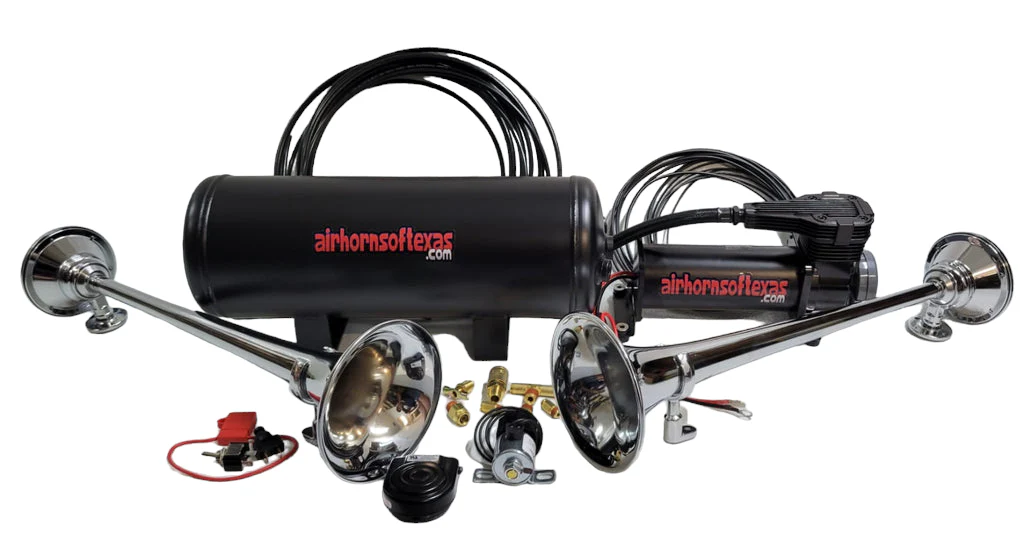
Best for: Classic “big truck” tone with heavy-duty components, aimed at work fleets and long-haul tractors.
Why we like it (field notes): The Air Horns of Texas kit is unapologetically truck-centric—bigger trumpets, stout horn mounting bracket hardware, and sensible mounting location options for bumpers, headache racks, or roof bars. Their catalog depth also makes it easier to source replacement diaphragms, rebuild bits, and fittings down the road.
Stand-out features:
- Traditional 24” truck-tone trumpet options, weather-tolerant hardware, and rebuild kits.
- Multiple tank sizes (1.5 gallon and up) help you tune blast duration vs. refill time.
- Direct support for shop managers who prefer installation professionals.
Brand reference: “BIG truck air horn kit” listing and catalog page.
HornBlasters Safety Horn Fire-Truck Style 228H Air Horn Kit
Buy here https://hornblasters.com/products/safety-horn
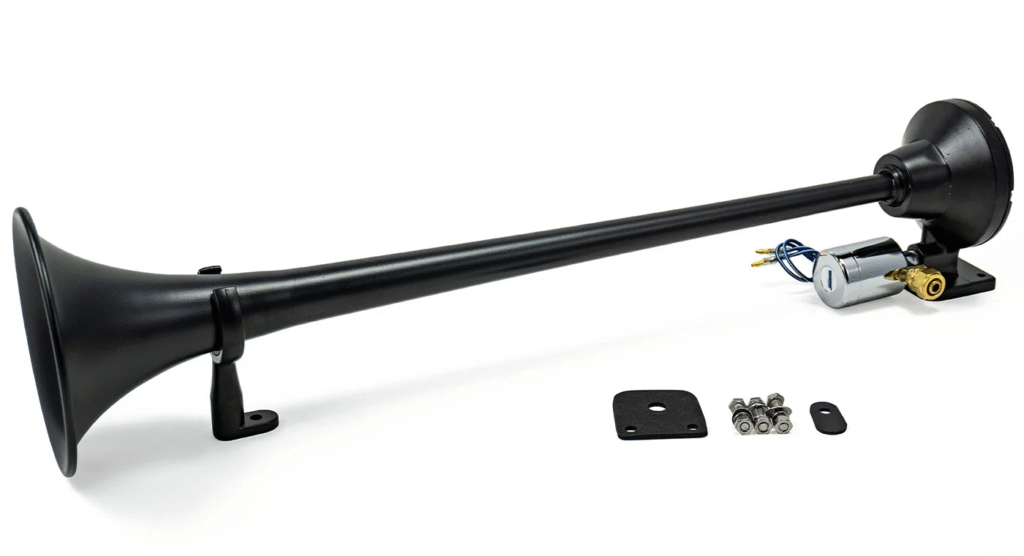
Best for: A fire-truck-style, attention-grabbing single trumpet with a compact onboard air source.
Why we like it (field notes): This single-trumpet “safety” voice is surgical—piercing without mud. It works when you need to cut through traffic noise fast, and the 2-gallon / ~145-psi packages many dealers pair to it keep plumbing minimal. Ideal for drivers who want big presence without a cluster of horns.
Stand-out features:
- Focused tone that reads “emergency-grade urgency.”
- Simple path to a neat air horn installation with pressure switch and lines.
- Good ecosystem of brackets, valves, and accessories.
Brand reference: HornBlasters Safety Air Horn page.
Wolo 152 dB Truck Air Horn System
Buy here https://www.amazon.com/WOLO-Cannon-Ball-Express-EV24/dp/B00B7IYVYU
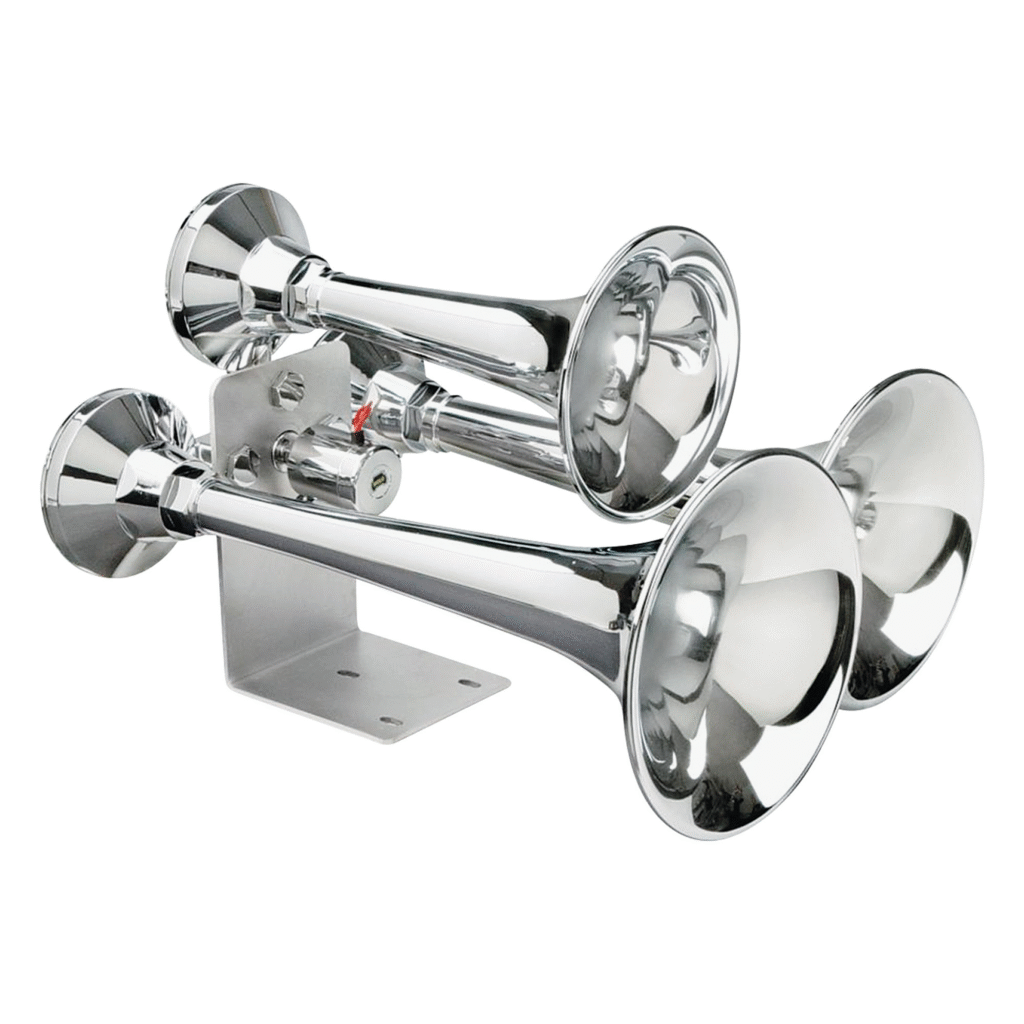
Best for: Budget-friendly “train-style” noise from a legacy brand with broad retail availability.
Why we like it (field notes): Wolo’s multi-trumpet systems (e.g., Midnight Express series) claim up to ~152 dB and bring sensible hardware—metal trumpets, solenoid valve, and hose—in a package most shops can install in an afternoon. It’s a straightforward way to get a truck horn brands stalwart on the nose of your rig.
Stand-out features:
- Multi-trumpet layout for fuller tone and better air horn sound quality.
- Off-the-shelf parts and approachable truck horn prices.
- Broad network for replacement pieces and truck horn warranty claims.
Brand reference: Wolo “Model 887 Midnight Express – 152 dB” product page.
Installation Considerations
Compatibility
Before you buy anything, do a compatibility guide check:
- Electrical system: Most kits are 12V air horn; some heavy trucks are 24V (Wolo sells 24V variants).
- Space claim: Verify trumpet length vs. the area behind the grille or on the bumper. Curved crash bars may reflect sound back toward the cab—audition with a cardboard mockup.
- Air source: Tanks and compressors must fit with safe clearance from heat sources (radiator, turbo plumbing).
- Weatherproof design: Choose a weather resistant horn with a sealed valve and stainless fasteners if you run salted roads.
Installation Process
Think of this section as a condensed truck horn installation guide—a blueprint you can hand to a seasoned DIYer or your tech.
Installation checklist (shop-ready):
- Mounting location & mounting height guidelines
- Keep trumpets forward-facing, tipped ~10–15° downward to shed water; avoid aiming directly at the hood to reduce reflected blast.
- Use the supplied horn mounting bracket or a plate with backing washers; check bumper flex.
- Keep trumpets forward-facing, tipped ~10–15° downward to shed water; avoid aiming directly at the hood to reduce reflected blast.
- Air system
- Mount tank low and drain-plug down; add a petcock for weekly draining (corrosion protection).
- Isolate compressor with rubber feet; allow airflow around the head (truck horn durability).
- Mount tank low and drain-plug down; add a petcock for weekly draining (corrosion protection).
- Wiring & plumbing
- Relay: 30 (battery fused) → 87 (compressor), 85 (ground), 86 (switch). Size fuse at 125% of compressor’s max draw.
- Use a proper air horn wiring harness and protect runs with loom; avoid sharp edges.
- Secure lines every 8–10”, keep away from exhaust heat; consider a water trap in humid climates (air horn maintenance win).
- Relay: 30 (battery fused) → 87 (compressor), 85 (ground), 86 (switch). Size fuse at 125% of compressor’s max draw.
- Switching & safety
- Separate your stock horn from the air system with a dedicated toggle; tie the horn button to a relay that chooses stock vs. air (“city/country” mode).
- Label the toggle; this is a horn safety features and truck safety devices practice that prevents accidental use in neighborhoods.
- Separate your stock horn from the air system with a dedicated toggle; tie the horn button to a relay that chooses stock vs. air (“city/country” mode).
- Test & aim
- Low-traffic lot, engine running. Short taps first; verify for leaks and vibration.
- Re-torque hardware after 100 miles and again at 500 miles (maintenance schedule).
- Low-traffic lot, engine running. Short taps first; verify for leaks and vibration.
When to hire installation professionals:
Complex bumpers, 24V trucks, or multiplexed steering-wheel controls can turn a one-hour job into an afternoon of troubleshooting. A good shop will follow your installation guidelines, document wiring, and return a neat loom you can actually service later.
Maintenance Tips
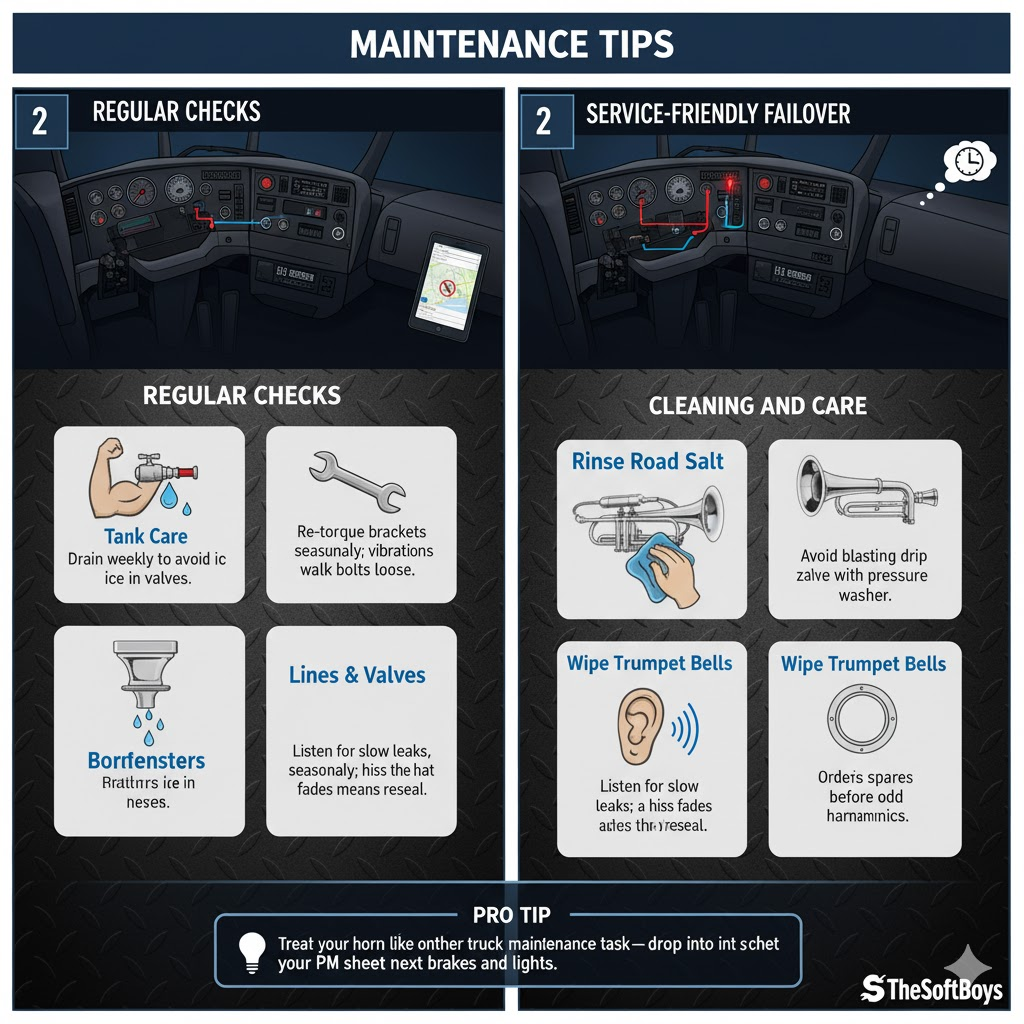
Regular Checks
- Tank care: Drain weekly in wet or freezing climates to avoid ice in valves (truck horn maintenance tips).
- Fasteners: Re-torque brackets seasonally; vibrations walk bolts loose.
- Lines & valves: Listen for slow leaks after shutdown; a hiss that fades means a fitting needs reseal.
Cleaning and Care
- Rinse road salt, avoid blasting the valve directly with a pressure washer.
- Wipe trumpet bells; debris causes odd harmonics and hurts truck horn sound quality.
- Keep an eye on diaphragms; order replacement diaphragms before you need them so a weekend failure doesn’t ground you.
Pro tip: Treat your horn like any other truck maintenance task—drop it into your PM sheet next to brakes and lights. Consistent care prevents the “works when it wants to” syndrome that ruins truck horn reviews and creates noise without authority (truck horn noise levels rise, but clarity falls).
Legal Considerations
Noise Regulations
There isn’t one national rule for aftermarket horns; you face a mix of state codes and, if you run cross-border, international regs.
- United States: Many state rules require a horn audible at ~200 ft and prohibit “unreasonably loud or harsh” tones or sirens on non-emergency vehicles—examples include California Vehicle Code §27000, Virginia Admin. Code 19VAC30-70-610, Washington RCW 46.37.380, and similar statutes in other states.
- International/ECE territories: UNECE Regulation No. 28 sets how horns are tested and limits typical sound levels to a range (minimum/maximum) measured at 2 meters from the outlet under standardized conditions. It’s why some European-market horns list 105–118 dB at 2 m, which is not directly comparable to close-range claims.
Bottom line: Street use is for safety, not for show. “Train horn” blasts can be considered truck horn noise pollution or even unlawful depending on local ordinances and truck horn legal requirements. Always check the street legality at your destination.
Usage Guidelines
- Use your horn as a vehicle safety features tool: short bursts to warn, not long blasts to vent.
- Avoid use near hospitals, schools, or at night in residential zones (truck horn usage guidelines).
- Keep “air” as a secondary channel (toggle) and leave your stock horn for routine taps (legality for air horns protection).
- For ECE or city-center operations, consider horns tested to R28 levels and save high-output kits for private property or off-road.
Conclusion
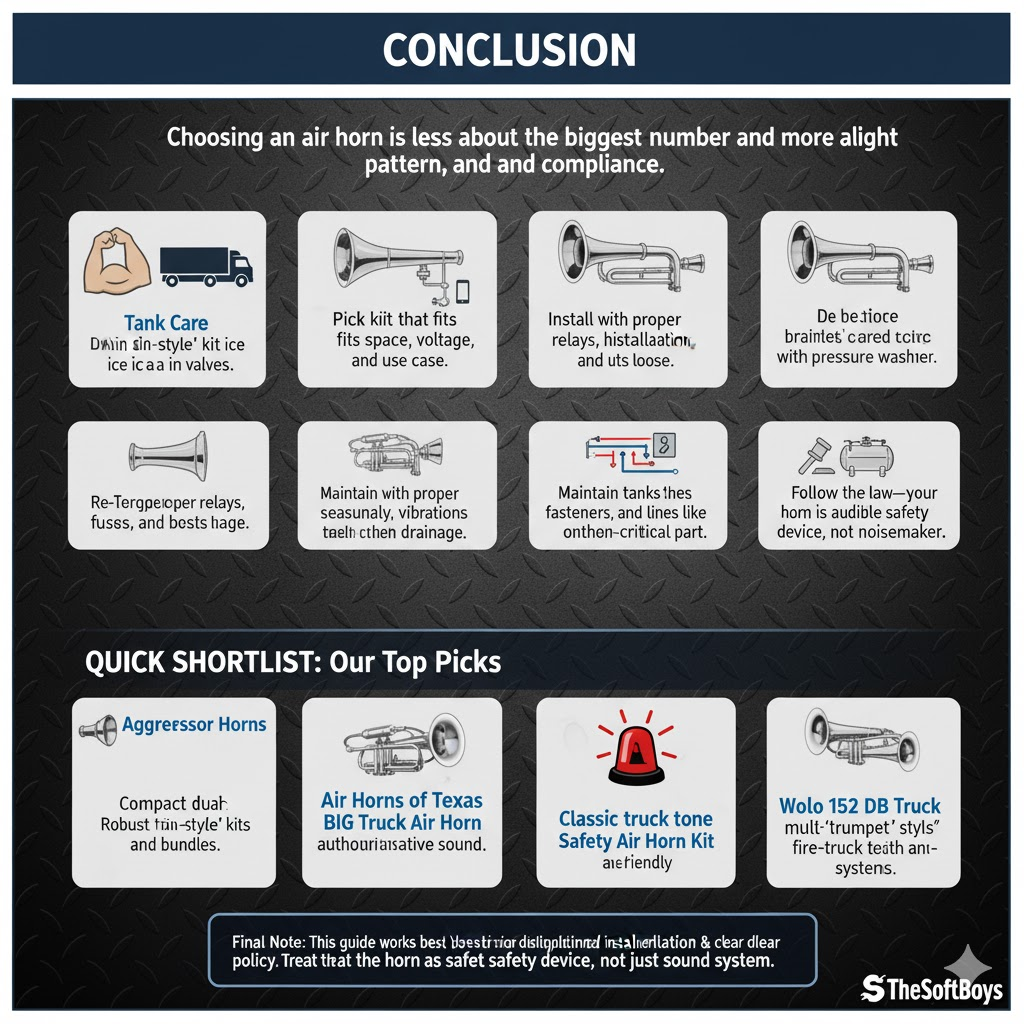
Choosing an air horn is less about the biggest number and more about the right pattern, installation, and compliance. For a clean, pro result:
- Pick a kit that fits your space, voltage, and use case.
- Install with proper relays, fusing, and drainage.
- Maintain tanks, fasteners, and lines just like any other mission-critical part.
- Follow the law—your horn is an audible safety device, not a noisemaker.
If you want a quick shortlist to get moving, this truck horn comparison is hard to beat:
- Aggressor Horns — robust “train-style” kits and bundles that simplify parts selection.
- MyPushcart Dual Air Horn — compact duals that fit tight spaces yet still sound authoritative.
- Air Horns of Texas BIG Truck Air Horn Kit — classic truck tone, rebuild support, and fleet-friendly options.
- HornBlasters Safety Air Horn (fire-truck style) — focused, urgent note with compact air sources.
- Wolo 152 dB Truck Air Horn System — value-forward multi-trumpet kits from a legacy brand.
Final note: This guide—Top Air Horns for Trucks: Enhance Your Vehicle’s Sound—works best when paired with disciplined installation and clear driver policy. Treat the horn as part of your truck security accessories and truck customization plan, not just your truck sound system. Done right, it becomes a quiet advantage: you’ll use it less because you placed it well, wired it cleanly, and kept it legal.
Spec-Sheet Glossary (so you can parse every listing)
- truck air horn, vehicle horn upgrade, loud truck horn, truck horn features, truck horn brands, truck horn types, truck horn kits, truck horn comparison, truck horn prices, truck horn warranty, truck horn customer reviews
- air horn installation, truck horn installation guide, air horn mounting, air horn wiring, air horn relay kit, air horn wiring harness, air horn power source, dual horn setup, 12V air horn, horn mounting bracket, mounting location, installation checklist, installation guidelines, installation professionals
- weather resistant horn, weatherproof design, corrosion protection, replacement diaphragms, air horn maintenance, maintenance schedule, horn care tips, truck horn maintenance, truck maintenance
- truck safety equipment, horn safety features, truck horn safety features
- truck horn noise levels, air horn decibels, air horn noise level, truck horn sound quality, air horn sound quality
- truck horn laws, truck horn legal requirements, truck noise regulations, legality for air horns, street legality, truck horn usage guidelines, truck horn noise pollution
- truck accessories, aftermarket air horn
- Ravelco (separate security device brand; included here in case you’re exploring broader truck security systems), NOGOSWITCH, IgnitionSafe Cutoff Remote (non-horn security gear often installed alongside horns for visibility and vehicle protection).
Extra human-effort checklist (printable)
- Verify voltage (12/24V), space, and airflow around the compressor.
- Drain the tank weekly; confirm petcock access with gloves on.
- Torque brackets, then paint-mark bolt heads to spot loosening.
- Add a water trap if you operate in high humidity or freeze-thaw cycles.
- Keep a spare fuse and 2 feet of airline in the glovebox.
- Record install photos in your maintenance app; note relay/fuse locations for future techs.
Keep this page handy as your practical playbook for Top Air Horns for Trucks: Enhance Your Vehicle’s Sound planning and installs.