A truck yard is a workplace with several different movements happening at once. Drivers may be parking, yard staff may be moving equipment, and people may be walking between offices, gates, and trailers. A useful yard plan identifies those interactions before a driver begins a maneuver, rather than relying on everyone to notice the truck at the right moment.
Learn the site's traffic arrangement
Check the facility's current entrance, signs, designated routes, and reporting instructions. Ask the approved contact about unfamiliar arrangements while stopped in an appropriate place. Do not assume that a yard visited previously is operating exactly as it did on the last trip.
The OSHA resources on workplace transport hazards provide official background for safety around trucking operations. The site's actual controls, the carrier's procedures, and the driver's training need to guide the movement in front of you.
Identify pedestrian routes and conflict points
Look for office entrances, marked walkways, crossing points, and places where a person could emerge from behind equipment. Keep attention on the areas relevant to the next movement. A person who appears to be looking at the truck may not understand its intended path.
Avoid assuming that workers in a familiar uniform have seen you or will remain in one place. Where the movement cannot be carried out safely, stop and follow the appropriate procedure for obtaining assistance or a clearer arrangement. Do not let another vehicle's impatience decide the timing.
Use assistance through an agreed procedure
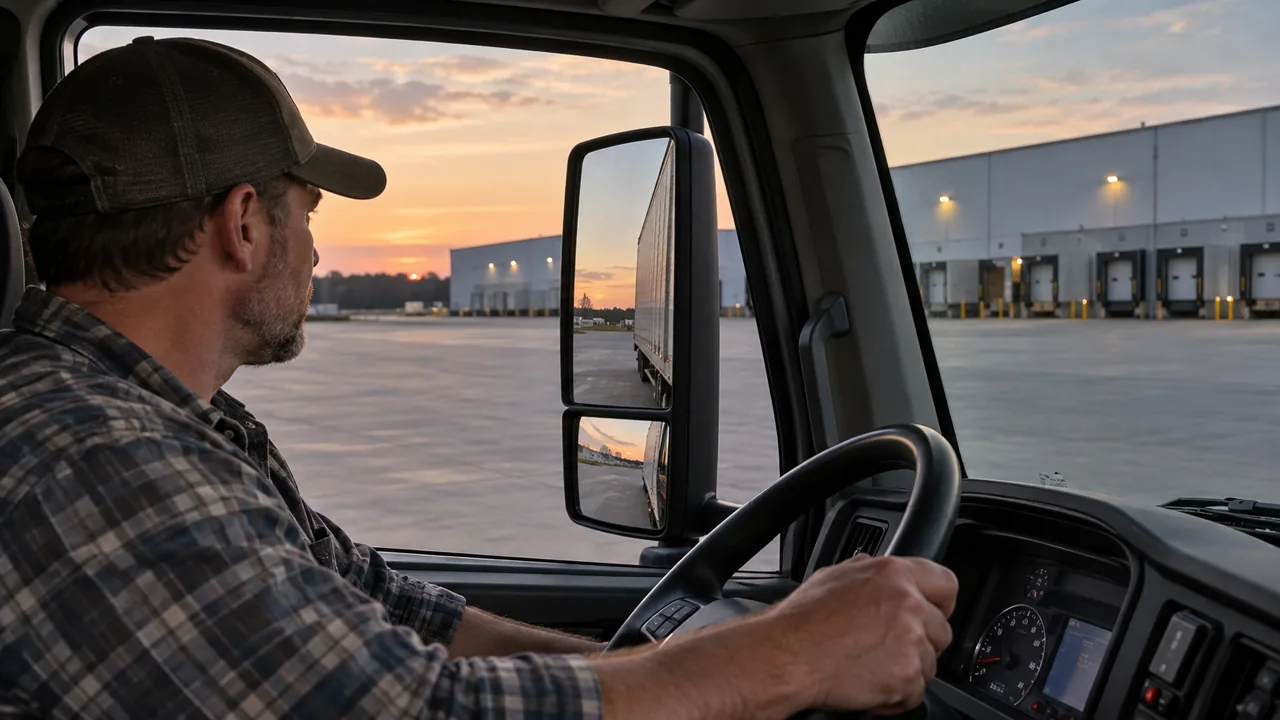
If a spotter or other assistance is required, follow the carrier and facility instructions. Establish the communication method and safe positions before the movement begins. A helpful wave from an unidentified person is not automatically a complete spotting arrangement.
The FMCSA's surveillance guidance gives additional context for looking deliberately around a commercial vehicle. Mirrors and cameras support observation, but they do not establish that every area around the truck is clear.
Keep other tasks out of the maneuver
Complete device adjustments and administrative messages while safely parked. A yard movement is not spare time for checking the next load, photographing a document, or answering a personal notification. Secure loose items before moving so they do not become another reason to look away.
If an instruction changes midway through the activity, stop through the appropriate safe procedure before clarifying it. Avoid combining a half-understood direction with a movement already in progress. The people around the truck need a clear, deliberate operation rather than a series of improvised corrections.
Leave the next person a useful observation
Report a recurring visibility problem, unclear sign, or conflict through the facility and carrier's approved channels. Describe the place and circumstances without assigning blame you cannot establish. Where a formal report is required, complete it while the details are still clear.
A safe yard routine depends on attention, clear instructions, and room to stop when the arrangement is uncertain. It is useful precisely because the surrounding work changes throughout the day. Learning the site's routes and the way people use them gives the next maneuver a more reliable starting point.
Related reading: A Better Backing Routine for Truck Drivers at Busy Loading Docks